As a Low-Voltage (LV) Distribution Board supplier with over a decade of working directly with electrical contractors, facility managers, and industrial maintenance teams, I’ve heard almost the same question a hundred times: “What’s the real difference between a fixed LV distribution board and a withdrawable one?” It sounds simple on the surface—until you’re in the middle of a critical facility outage, stuck deciding which option would’ve saved you 4 hours of downtime vs. 40 minutes of frustration. I’ve written this post to break it down, not with jargon that’ll leave you Googling mid-project, but with the on-the-ground experience that comes from selling, installing, and supporting these boards for hundreds of clients across commercial and industrial spaces. Lv Distribution Board

First, let’s start with the basics, so we’re all on the same page. An LV distribution board is the central hub that takes power from your main utility supply and splits it into separate circuits for lighting, machinery, HVAC, office equipment, and other loads. Think of it like a circuit board’s older, bigger, more hardworking cousin—without it, your building is just a bunch of wires and no direction for power. The two most common types you’ll encounter in the industry are fixed and withdrawable, and the differences go way beyond their names. I see suppliers and contractors mixing these up all the time, which leads to bad purchasing decisions: clients buying a fixed board for a process that needs constant circuit swaps, or dropping extra cash on a withdrawable board when all they need is a simple office upgrade. Let’s fix that.
Let’s start with fixed LV distribution boards, because they’re the more common, entry-level option that’s been around for decades. At its core, a fixed board has every circuit breaker (or switch, fuse, whatever protection device you’re using) bolted permanently to the main busbar—the thick copper bar that carries power from the main supply. There’s no way to pull a breaker out without shutting off the entire board, disconnecting all the other circuits, and exposing live parts if you’re not super careful. I remember my first big commercial job, a small retail space in downtown Chicago, where the electrician insisted on a fixed board. “It’s cheap, it fits the 10-circuit requirement, and we don’t need anything fancy,” he told me at the time. That worked for a few years, until the store added a new refrigeration unit and had to upgrade the lighting system. When they needed to swap out a faulty lighting breaker, the electrician had to shut off power to the entire sales floor—including the refrigeration units, which meant $1,200 in lost perishables over 2 hours of downtime. That’s the tradeoff with fixed boards: simplicity and low upfront cost, but zero flexibility for individual circuit maintenance.
Wait, but let’s be clear: fixed boards aren’t bad—they’re just the right fit for specific jobs. I sell more fixed boards than withdrawable ones, mostly for small offices, retail spaces, and residential complexes with under 100 circuits. Their design is straightforward, which means they’re easier to install, lighter, and take up less space than a comparable withdrawable board. No extra parts, no complex mechanisms, just reliable protection for circuits that don’t need frequent changes. The downside is the downtime. If any circuit breaker fails, or you need to add, remove, or rearrange a circuit, you have to de-energize the entire board. That’s a big deal in spaces where even 30 minutes of downtime costs money, like manufacturing plants, data centers, or hospitals. For those, fixed boards are usually the wrong call—unless you plan for that downtime upfront, like scheduling maintenance during off-hours.
Now, let’s talk about withdrawable LV distribution boards, which I often describe as the upgrade that solves most of fixed boards’ problems. The key difference here is that each circuit breaker is mounted on a removable, sliding (or withdrawable) carriage that connects to the main busbar via a set of plug-in contacts. That means you can pull the entire breaker and carriage out from the front of the board—even when the main supply is live—without shutting off any other circuits. It sounds like a small thing, but it’s a game-changer for reliability. I saw this in action at a food processing plant I worked with last year. One of their conveyor line breakers started tripping constantly, and their maintenance team needed to replace it. With a fixed board, that would’ve meant shutting down the entire conveyor line, which was responsible for $80,000 an hour in product output. Instead, they pulled the faulty breaker’s carriage, swapped in a spare pre-configured with a new breaker, pushed it back in, and were back up and running in less than 10 minutes. No downtime, no lost product, no panic. That’s the real value of withdrawable boards—they’re built for environments where uptime isn’t a nice-to-have, it’s non-negotiable.
But withdrawable boards aren’t all perks, and I’d never recommend them for every job. They’re more complex to design and build, so their upfront cost is 20-50% higher than a comparable fixed board, depending on the number of circuits. They’re also bulkier, because they need extra space for the withdrawable carriages and their contact systems, so if you’re working with a tight electrical room footprint, a withdrawable board might not fit. Plus, they require a bit more training for maintenance teams—you can’t just pull out a breaker on a whim; you have to make sure the carriage is properly seated to avoid arcing, and you need to test the spare breakers regularly to make sure they work when you need them. I’ve had clients buy a withdrawable board just because they thought it was “better,” only to waste money on features they’d never use, like a 30-circuit withdrawable board for a small 8-circuit office that’ll never need a spare breaker. That’s the mistake I want to help you avoid today.
Let’s break down the key use cases for each, because that’s where the real difference lies—not in the technical specs, but in what they’re built to handle. Fixed LV distribution boards are perfect for: small commercial spaces (offices, retail stores with less than 10 circuits), residential buildings, backup power systems where you don’t need frequent circuit changes, and projects with tight budgets where upfront cost is the top priority. They’re reliable, easy to install, and simple to maintain for electricians who only work on small-scale projects. I recently sold 12 fixed boards to a new apartment complex in Detroit, and the electrician told me he chose them because the complex only needed 8 circuits per unit, and he could install each board in an hour, with no extra training for his team. That makes total sense for that job.
Withdrawable LV distribution boards, on the other hand, are built for environments where uptime and minimal downtime are critical. That includes: industrial manufacturing facilities, food and beverage processing plants, data centers, hospitals and healthcare facilities, large retail chains with multiple locations, and any space where a single circuit outage can cost thousands or even millions of dollars per hour. I’ve seen withdrawable boards save companies hundreds of thousands of dollars in downtime costs, and that often pays for the extra cost of the board in a single maintenance event. For example, a client in the automotive industry I work with has a withdrawable board for their main assembly line. Last quarter, a motor breaker failed during a night shift, and their maintenance team swapped it out in 7 minutes, avoiding a 4-hour line shutdown that would’ve cost them $2.1 million. That’s the value of a withdrawable board—when you need it, it pays for itself fast.
Another key difference that I don’t see many suppliers talk about is scalability. Withdrawable boards are easier to expand, because you can add a spare breaker and carriage without shutting down the entire board. Fixed boards require you to add new wires, mount a new breaker, and often rework the entire busbar if you need more circuits, which means shutting down power to the entire building. I had a client in the tech space who started with a fixed board for their small office, then expanded to a 5,000-square-foot workspace. When they needed to add 12 new circuits for server racks, their electrician told them they’d have to shut down the entire office for 6 hours, costing them $18,000 in lost productivity. They ended up upgrading to a withdrawable board, and adding the new circuits only took 45 minutes, during a scheduled off-hours window. That’s a tangible difference that affects your bottom line, not just your electrical system.
Wait, but there’s a safety factor I need to mention, because that’s non-negotiable in electrical work. Fixed boards require you to work on live parts when you need to access a breaker—even if you’ve shut off the circuit, there’s a risk of backfeed or accidental powering on, which can lead to shocks or fires. With withdrawable boards, you have a visible disconnect: when you pull the carriage out, it breaks the electrical connection completely, and the circuit is physically isolated from the busbar. That reduces the risk of human error during maintenance, which is a big win for safety. I always tell contractors that safety is the biggest hidden cost of choosing the wrong board—an outage caused by human error during maintenance isn’t just downtime, it’s a risk to employee lives.
Of course, no conversation about LV distribution boards is complete without talking about maintenance, because even the best boards need upkeep. Fixed boards are simpler to maintain, because there are fewer moving parts. You can test each breaker individually, as long as you shut off the circuit, and there’s no complex mechanism to service. Withdrawable boards have more parts—carriages, contactors, locking mechanisms—so they require more regular inspections to make sure the plugs are clean, the locking latches work, and the spare breakers are tested. That’s not a downside, just something to plan for. I always include a maintenance guide with every withdrawable board I sell, and I offer a free training session for the maintenance team, because I want them to feel comfortable using the system without risking safety.
So, which one is right for you? That’s the question I want every reader to answer for their specific project, not just go with what’s cheaper or what’s more popular. If you’re working on a small office, a residential complex, or a retail space with under 10 circuits, and downtime isn’t a major concern, a fixed LV distribution board is probably the right choice. It’s reliable, low-cost, and easy to install. But if you’re working on an industrial plant, a data center, a hospital, or any space where a single outage costs thousands of dollars per minute, a withdrawable board is worth every extra penny. It’s built for uptime, safety, and flexibility, and it will save you money in the long run, even if the upfront cost is higher.
I’ve seen too many clients make the wrong choice because they didn’t understand the difference. Last year, a small manufacturing plant in Ohio bought a fixed board because it was $1,500 cheaper, and 6 months later, a faulty breaker shut down their production line for 3 hours, costing them $30,000. That’s 20 times the extra cost of a withdrawable board, and they ended up replacing the fixed board anyway. That’s the kind of mistake I want to help you avoid. As a supplier, my job isn’t just to sell you a board—it’s to make sure you get the right one for your needs, so you don’t end up with a costly, avoidable problem down the line.
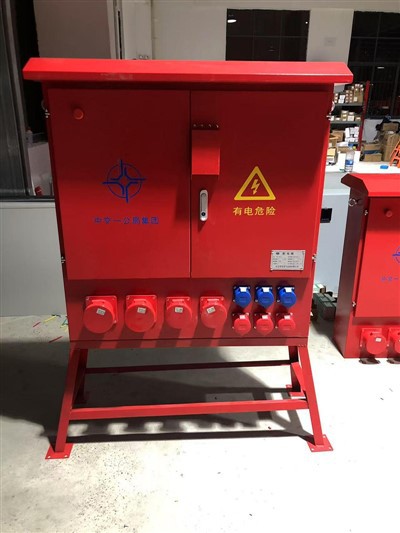
If you’re not sure which option is right for your project, or you have questions about the specs, installation, or maintenance of either board, don’t hesitate to reach out. I’ve worked with clients across industries, from small startups to large corporations, and I can help you assess your needs, compare options, and find a solution that fits your budget and your uptime requirements. I’m here to help, not just make a sale, so feel free to ask me anything, no question is too small.
Distribution Box References
- IEC 60439-1: Low-voltage switchgear and controlgear assemblies – Part 1: General rules
- NFPA 70: National Electrical Code, Article 408: Switchboards and Switchgear
- Schneider Electric LV Distribution Board Technical Guide, 2022
- Electrical Construction & Maintenance Magazine: “Choosing Between Fixed and Withdrawable LV Switchgear”, 2021
- IEEE Transactions on Industry Applications: “Downtime Cost Analysis for Low-Voltage Distribution Systems”, 2020
Anhui Nanxian Electric Co., Ltd.
With abundant experience, we are one of the most professional lv distribution board manufacturers and suppliers in China. We warmly welcome you to buy advanced lv distribution board for sale here and get quotation from our factory. All customized products are with high quality and low price.
Address: Factory Unit 03-2, Building 21, Feidong Yinfeng Industrial Park Co., Ltd., Northeast Corner of Manquan Road and Changle Road, Hefei Circular Economy Demonstration Park, Feidong County, Hefei City, Anhui Province.
E-mail: 541580567@qq.com
WebSite: https://www.nxelepower.com/
