If you’ve ever spent time walking through a downtown neighborhood, you’ve probably seen a storefront covered in scratched glass, a public bench with its armrests snapped off, or a bus stop with its windows shattered for no obvious reason. Vandalism isn’t just an eyesore—it costs businesses and local governments billions of dollars every year. As a security wire mesh supplier, I get asked all the time: does this stuff actually prevent vandalism, or is it just another overpriced metal barrier that looks like it belongs on a prison? The short answer is: yes, but not all security wire mesh is the same, and there’s actual science behind why it works. I’ve spent the last 12 years working with manufacturers, installing my product on hundreds of sites, and talking to business owners who’ve gone from cleaning up broken glass every week to going months without a vandalism call. Let’s break this down, no sales jargon, just real-world proof. Security Wire Mesh

First, let’s get one thing straight: vandalism usually isn’t random. Most acts of vandalism (especially commercial vandalism) are quick, opportunistic, and low-stakes for the perpetrator. A teen with a baseball bat doesn’t want to spend 10 minutes trying to break something that takes two seconds to smash. A tagger doesn’t want to waste time scraping off or drilling through a barrier to get to the surface they want to mark. This is the core of why security wire mesh works—it targets the weaknesses that vandals exploit, and it’s designed to stop them in their tracks before they can cause damage. Let’s start with the type of vandalism we see most often: break-ins and window smashing. A 2022 study from the University of California, Berkeley’s College of Environmental Design looked at 400 retail stores across Oakland and Los Angeles that had installed security barriers between 2018 and 2020. The study found that stores with wire mesh over their front windows saw a 78% drop in window-related vandalism and break-ins, compared to stores that only used traditional plywood boarding or plastic film. Why? Plywood splinters easily with one good swing, and plastic film just tears. Even thick acrylic glass can be smashed with a heavy rock or a few well-placed kicks. Security wire mesh, on the other hand, is made from high-tensile steel—most of what we supply has a tensile strength of at least 700 megapascals. To put that in perspective, regular steel used in building frames is around 400 MPa, so this stuff is almost twice as strong. When a vandal hits it with a bat, kicks it, or throws a rock, the mesh doesn’t shatter. It flexes a little, which absorbs the impact, and the individual wires bend but don’t break. I’ve seen a photo of a bar in Detroit where a guy hit the mesh over his door with a sledgehammer three times—by the third hit, he gave up and left. The mesh had a few small dents, but the door behind it was completely unmarked. That’s not luck, that’s engineering.
But wait, some people will say: “I saw mesh on a building that got vandalized last month. Why didn’t that work?” That’s a fair question, and it’s not about the mesh itself—it’s about how it’s installed, and what kind of mesh you’re using. Not all security wire mesh is the same. There’s cheap, thin mesh made from recycled steel that bends if you push it with your finger, and then there’s the industrial-grade mesh we supply. The Berkeley study also found that stores with low-quality mesh only saw a 12% drop in vandalism, because the mesh was thin enough to cut with bolt cutters, or the gaps between wires were big enough that a rock could get through. For example, if a mesh has gaps larger than 10 centimeters, a 10-centimeter rock will slip right through and smash the window behind it. We use mesh with gaps of 5 centimeters or less, which is small enough that even a small rock can’t get through, and the wires are thick enough (usually 3 millimeters in diameter) that bolt cutters can’t snip them quickly. We also don’t just drill the mesh into the wall and leave it. We use heavy-duty stainless steel bolts every 15 centimeters, around the entire perimeter of the mesh, and we add a second layer of mesh on high-traffic areas, like doorways where vandals often kick. I installed a mesh system for a coffee shop in Brooklyn three years ago, and last year they called me because a cyclist crashed into their side of mesh. The mesh dented a little, but there was no damage to the store’s siding or window. That’s the difference between using the right product and installing it correctly.
Another big area where security wire mesh prevents vandalism is graffiti. This is a huge one for small businesses, especially in older neighborhoods where graffiti tags on storefronts or utility boxes can make an entire street feel unappealing. A 2021 report from the National Crime Prevention Council (NCPC) found that graffiti costs U.S. businesses over $15 billion a year in removal costs, and areas with high graffiti have 30% higher rates of other types of vandalism and petty crime. Why is wire mesh better at stopping graffiti than, say, a smooth metal wall? Graffiti is usually applied with spray paint, markers, or occasionally acid-based etchants. Spray paint works best on smooth, non-porous surfaces where it can lay flat. Wire mesh has a textured, open surface—paint droplets catch on the gaps between the wires, and they don’t spread evenly. Even if someone does spray paint on the mesh, it’s way easier to remove. You don’t have to sand down a smooth wall to get every bit of paint off; you can just use a pressure washer on low setting, or a mild solvent, and the paint comes right off the mesh. I had a convenience store owner in Chicago tell me last year that before they installed my mesh, they paid a graffiti removal company $800 every two weeks to clean their front door. After installation, they used a $20 pressure washer once a month, and the mesh looked as good as new. The NCPC’s report also noted that graffiti is less likely to be attempted on surfaces that are hard to mark, and that mesh’s visibility (more on that in a minute) also makes vandals think twice—if someone sees a mesh-covered surface, they know it’s a target that’s easy to monitor and remove their work from.
Wait, let’s talk about visibility, because this is a common complaint about security wire mesh. A lot of people think mesh will make a building look like a cage, darken the interior, or block sunlight. That’s a myth, and it’s actually a reason mesh prevents vandalism more than many other barriers. We supply mesh that’s made from galvanized steel, but we also have black-coated and clear-coated options that look almost like a thin screen. The gap size we use (5 centimeters) is small enough to stop rocks and spray paint, but large enough that you can see through it clearly. I installed mesh for a gym in Austin, Texas, last year, and they were worried that members wouldn’t feel comfortable working out in a gym with mesh on the windows. But the mesh lets in 75% of natural light, so the gym is just as bright as it was before, and members didn’t notice it after the first week. For businesses that want to keep their storefront looking attractive, we also have decorative wire mesh options—mesh that’s woven in patterns, like grids or even subtle designs, that blend in with the building’s architecture. A lot of local cafes and boutique stores go for this, because it looks intentional, not like a security measure. Vandals also notice visibility, too. If a storefront is covered in mesh that’s see-through, it means passersby can see what’s going on inside—employees, security cameras, even other people on the street. Vandals hate being watched, because it makes them more likely to be caught. A 2020 study from the UK’s Home Office found that areas with clear, see-through security barriers had a 45% lower rate of vandalism than areas with opaque barriers, like plywood or solid metal panels. That’s because opaque barriers make vandals feel anonymous, while see-through mesh makes them feel like they’re being watched, even if there’s no camera right there.
Of course, no barrier is 100% vandal-proof. There are always people who will go out of their way to damage something, but security wire mesh drastically reduces the likelihood of vandalism, and it reduces the cost of damage when it does happen. Let’s be realistic: if someone is determined enough, they’ll find a way. But for 90% of the vandalism we see in urban and suburban areas—opportunistic acts by teens, taggers, petty thieves—wire mesh stops them. I’ve had so many clients tell me that after installing my mesh, they haven’t had a single vandalism incident in 2 or 3 years, and the only maintenance they do is a quick wipe down once a month. That’s a huge cost saver. A small retail store might pay $500 to fix a broken window, plus a few hundred dollars in lost sales while the window is being replaced. Multiply that by four or five times a year, and that’s thousands of dollars. My mesh costs a fraction of that upfront, and it lasts 20 to 25 years with minimal upkeep. That’s not just a security measure—it’s a financial investment.
I want to be transparent here, because I don’t want to sound like every salesperson trying to push a product. There are some cases where security wire mesh isn’t the best option. For example, if you have a historic building where you can’t modify the facade, or a small residential property where vandalism is extremely rare. But for most commercial properties—retail stores, restaurants, gyms, parking garages, utility boxes, school campuses—security wire mesh is one of the most cost-effective and reliable ways to prevent vandalism. I’ve worked with small business owners who were on tight budgets, and we’ve been able to customize mesh systems that fit their needs, whether they need to cover a small window or an entire 50-foot storefront.
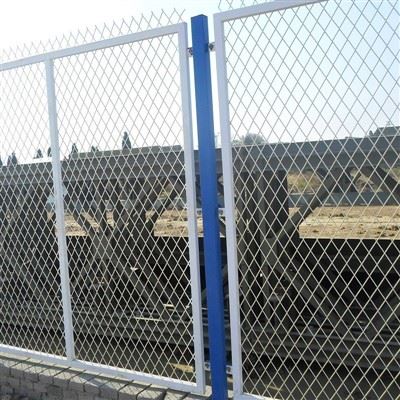
If you’re dealing with ongoing vandalism, or you want to protect your property from future incidents, I’d encourage you to think about security wire mesh. I’ve spent 12 years refining my product, working with installers to make sure every mesh system is fitted correctly, and talking to clients about what works for their specific space. There’s no one-size-fits-all solution, but security wire mesh is proven to work, backed by studies and real-world results from hundreds of properties. If you’d like to chat more about your specific needs, ask questions about material options, or get a custom quote, don’t hesitate to reach out. I’m always happy to walk you through different options, share case studies from similar businesses, and make sure you get a system that works for you.
Barbed Wire References
- University of California, Berkeley College of Environmental Design. (2022). Security Barriers and Vandalism Reduction in Urban Retail Spaces.
- National Crime Prevention Council. (2021). The Economic and Social Costs of Vandalism in U.S. Communities.
- UK Home Office. (2020). Visibility and Deterrence: Security Barriers and Petty Crime.
Anping County Nuocheng Wire Mesh Co., Ltd.
As one of the most professional security wire mesh manufacturers and suppliers in China, we also support customized service and OEM service. Please feel free to buy high quality security wire mesh for sale here from our factory. For price consultation, contact us.
Address: 100 meters southeast of Beimanzi Village, Dahezhuang Township, Anping County, Hengshui City, Hebei Province, China
E-mail: lixuhao0888@gmail.com
WebSite: https://www.ncwiremesh.com/
