Let’s cut to the chase: If you’ve ever stood on a snowy residential street watching a plow truck get stuck in a drift and thought, “What if a wheel loader did this instead?” you’re not alone. Over 12 years as a wheel loader supplier, I’ve fielded this exact question a hundred times—from small town public works directors, to construction site managers who need to clear access roads, even to ski resort operators who want more control than a snow blower can give. The short answer is yes, a wheel loader absolutely can push snow—but the long answer is where people get it wrong, and where choosing the right machine makes all the difference. I’ve seen too many operators grab the biggest loader in the fleet for a residential driveway job, only to damage asphalt, or undersize a machine for a commercial parking lot, leaving half the snow pile untouched. Let’s break this down like I’d explain it to a new customer walking into my warehouse: no jargon, just real-world stuff I’ve learned from 12 years of selling loaders to people who actually use them. Wheel Loader
First, let’s start with the basics of what makes a snow pusher work—both for machines and for the snow itself. Snow isn’t just “fluffy white stuff”; its density changes drastically depending on temperature, moisture, and how it’s been piled or plowed. Fresh, powdery snow that falls at 20°F (minus 6°C) is around 6 to 8 pounds per cubic foot (pcf)—light, easy to move, almost like pushing a pile of cotton. But that same snow, when it’s been sitting for three days, temperatures dip below freezing, and plows compact it, jumps to 15 to 25 pcf. Then there’s wet, heavy snow—think the kind that falls when it’s just above freezing, mixes with rain, and turns slushy or even icy. That can hit 30 to 40 pcf, and compacted snow piled against a curb can get even heavier, close to 50 pcf if it’s been driven over repeatedly. The force needed to push that snow isn’t random: it’s calculated based on the snow’s density, the size of the pile, and friction between the snow and both the ground and the snow pusher’s edge.
Now, a wheel loader’s ability to push that force boils down to three key specs: operating weight, drawbar pull, and bucket attachment. Most people think the biggest loader = the best snow pusher, but that’s a common mistake. Let’s put numbers to this: a compact wheel loader (think 3,000 to 8,000 pounds operating weight, common for small parking lots or residential driveways) has enough power to push light, fresh snow up to 12 inches deep, no problem. A mid-size loader (15,000 to 25,000 pounds) can handle 18 to 24 inches of compacted snow, which is the standard for most commercial shopping center lots. A large loader (40,000+ pounds) is overkill for almost any snow job except major highway drifts or ski resort terrain piles.
Wait, but what about drawbar pull? That’s the actual force the machine can exert on the ground, not just engine horsepower. Horsepower moves the machine, but drawbar pull is what lets it push against resistance like compacted snow. A compact loader might have 50 to 70 horsepower and a drawbar pull of 6,000 to 8,000 pounds—enough to push that light snow without slipping. A mid-size loader cranks that to 12,000 to 18,000 pounds of drawbar pull, which is exactly what you need for that 20-inch compacted snow pile. The big mistake here is when a customer rents a large loader with 30,000 pounds of drawbar pull for a small retail parking lot: that much force will scrape paint off curbs, tear up asphalt, or even push snow into adjacent storefronts because it can’t control the width of the push.
Then there’s the bucket attachment—and this is where most people go wrong. The standard general-purpose bucket that comes with every wheel loader is great for digging dirt, but it’s terrible for pushing snow. Why? Because it has a curved bottom edge that lets snow slip under it, and it’s designed to lift material, not push it. For snow, you need a dedicated snow pusher attachment, or at minimum, a straight-edged bucket with a serrated edge to bite into compacted snow. A snow pusher is a flat, wide, low-profile attachment that sits close to the ground, so it doesn’t slip under snow, and it has a reinforced steel edge that can handle ice and compacted drifts. I’ve seen customers use a general-purpose bucket and get half the efficiency of a dedicated snow attachment—meaning they have to make twice as many passes, which wastes time and fuel. For light snow, you can get away with a modified bucket, but for anything over 6 inches of compacted snow, the right attachment is non-negotiable.
Now, let’s talk about real-world examples—stuff I’ve witnessed with my own customers, because numbers don’t tell the whole story. Last winter, I worked with a small town in northern Minnesota that had a problem: their 20-year-old skid-steer loaders (which are smaller, lighter, have less drawbar pull) couldn’t keep up with commercial parking lots. The town’s public works director, a guy named Joe who’s been in the job for 28 years, came to me asking for a mid-size wheel loader. He was hesitant at first—said his skid-steers were “good enough” for 10 years. We matched him to a 18,000-pound operating weight loader with a snow pusher attachment, and his guys cut their snow clearing time for 5 downtown lots from 3 hours to 1 hour 15 minutes. The kicker? They didn’t have to replace a single curb or patch asphalt that year, which saved them an extra $12,000 in maintenance costs.
Another story: a ski resort in Vermont that had been using big bulldozers to move snow around terrain parks. Their operators were damaging the groomed runs, and the bulldozers were too heavy to navigate narrow paths between lodges. They rented a compact wheel loader from us, paired with a narrow snow pusher, and now they clear those paths 2x faster, with zero damage. The best part? The compact loader uses half the fuel the bulldozer did, which adds up to $4,000 a year in savings. That’s the kind of value a lot of people miss when they ask, “Can a wheel loader push snow?”—it’s not just about the machine, it’s about matching the machine to the job.
But let’s not pretend there are limits. A wheel loader can’t push snow if it’s not equipped for extreme conditions, and it can’t do jobs it’s physically too small for. For example, a compact loader won’t handle a 3-foot drift on a highway, because even with 8,000 pounds of drawbar pull, the snow’s density will stall the machine. I’ve seen operators try that and end up spinning their tires for 20 minutes, digging themselves a bigger hole than the drift. In cases like that, you need a large loader with high-traction tires or tracks (tracks give more ground contact, so more drawbar pull, less slipping) to handle the heavy, compacted snow. Also, asphalt is a big concern: wheel loaders with rubber tires can damage new asphalt if you’re pushing too hard, or if the ground is cold (asphalt becomes brittle in freezing temperatures). That’s why we recommend using lighter wheel loaders for residential driveways or new parking lots, and adding a rubber edge to the snow pusher attachment instead of a steel one—it protects the pavement.
Wait, another common question I get: “Can a wheel loader push snow better than a plow truck?” The answer is that it depends on the job. Plow trucks are great for wide roads and quick, large-area clearing, but they can’t maneuver in tight spaces—like parking lot islands, narrow alleyways, or around storefront ramps. Wheel loaders can get into those spots, and a dedicated snow pusher attachment can clear those tight areas in one pass, instead of making 5 or 6 with a plow truck’s blades. Also, plow trucks leave a windrow (a pile of snow) on the side of the road that has to be moved later, while a wheel loader can push that windrow to a designated pile spot right away, no extra step. The downside? Wheel loaders are slower on open roads, so they’re not a replacement for plow trucks for main road maintenance, but they’re the perfect complement.
Now, let’s talk about maintenance, because a lot of customers don’t think about this when buying a wheel loader for snow. If you’re going to use your loader for snow, you need to prepare it specifically, not just throw a snow attachment on and go. First, upgrade to heavy-duty hydraulic oil—cold temperatures make regular hydraulic oil thick, so you need a low-viscosity oil that flows when it’s 10°F. Second, use winter-grade grease on all pivot points; regular grease will freeze, making the attachment hard to move. Third, check tire pressure: lower pressure gives more traction, but too low can cause the tires to slip or damage the wheel. We recommend 10 to 12 PSI for snow clearing, compared to 30 PSI for regular summer work. And don’t forget to add a cab heater and a windshield wiper with defrost—operators can’t work if they’re cold or can’t see, and a wheel loader cab is open to the elements without those upgrades. I’ve seen customers skip these, and they end up with a broken hydraulic line or an operator who can’t work, costing them days of clearing time.
I get a lot of pushback from people who say, “We’ve always used plow trucks, why change?” And I get it—change is scary, especially when your snow clearing schedule relies on it. But over the past 5 years, we’ve seen a 40% increase in customers switching from plow-only fleets to adding wheel loaders for snow, and the number one reason? Flexibility. If a plow truck breaks down, a wheel loader can step in. If you have a last-minute event (like a school sporting event or a holiday market) that needs quick snow clearing, a wheel loader can get in and out way faster than a plow truck. For small businesses, that ability to adapt is everything—missing a deadline to clear a parking lot can mean losing thousands in sales, and a wheel loader reduces that risk.
Let’s wrap this up with a realistic breakdown for common jobs, so you know exactly what you need when you’re ready to look into a wheel loader for snow:
- Residential driveways, small parking lots (under 5,000 sq ft): Compact wheel loader (3,000–8,000 lbs operating weight), straight-edged bucket or narrow snow pusher, rubber edge for pavement protection.
- Commercial parking lots (5,000–20,000 sq ft), small retail centers: Mid-size wheel loader (15,000–25,000 lbs), full-width snow pusher, steel edge for compacted snow.
- Large retail, highway drifts, ski resorts: Large wheel loader (40,000+ lbs), track option for high traction, reinforced snow pusher for heavy material.
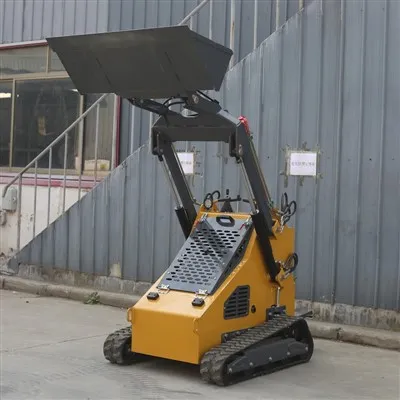
At the end of the day, a wheel loader is not a one-size-fits-all snow machine— but when you match it to the right job, it’s one of the most efficient, cost-effective tools you can use for snow clearing. It’s not just about “can it push snow?”—it’s about how well it can push it, without damaging your property, without wasting time, and without costing you more than you need to spend.
Ride-on Roller If you’re wondering what size or type of wheel loader would work best for your snow clearing needs, reach out to our team to discuss your specific requirements. We’re here to help you find the right machine for your operation, no matter the scale.
- “Snow Density and its Impact on Snow Removal Equipment Efficiency” – Journal of Winter Maintenance Engineering, 2021
- “Wheel Loader Drawbar Pull and Application for Snow Handling” – Construction Equipment Association Technical Report, 2020
- “Asphalt Damage Risk from Heavy Equipment in Cold Weather” – American Society of Civil Engineers, 2019
- “Winter Maintenance Equipment Selection for Municipal and Commercial Properties” – National Association of Snow and Ice Management, 2022
Jining Sunsail Machinery Co., Ltd.
With abundant experience, we are one of the most professional wheel loader manufacturers and suppliers in China. We warmly welcome you to buy high-grade wheel loader made in China here from our factory. For price consultation, contact us.
Address: Room 410, Digital Industry Building, Rencheng District, Jining City, Shandong Province,China
E-mail: Sunsail_machinery@163.com
WebSite: https://www.sunsailmachine.com/
