Hey everyone, if you’re in construction, you’ve probably dealt with formwork—you know, that temporary structure that holds concrete until it’s strong enough to stand on its own. And if you’re weighing options between PP formwork and plywood, you’re definitely not alone. I’m [your name], and I’ve been in the PP formwork game for the past 8 years, so I’ve seen every trick, cost curve, and headache that comes with choosing the right form material. A lot of contractors hit me up asking the same question: “What’s the real cost difference between PP formwork and plywood? Because the initial sticker seems higher, but I swear my buddy swears by it.” Today, I’m breaking this down like we’re chatting over a job site coffee—no fancy jargon, just straight numbers and real-world stuff. PP Formwork
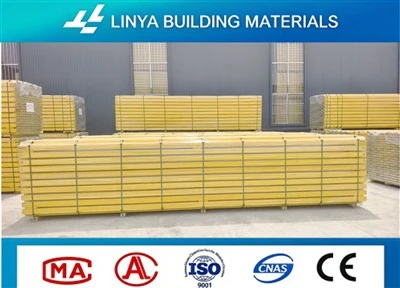
First, let’s get one thing out of the way: “cost” isn’t just the price tag at the supply store. That’s the rookie mistake everyone makes. You’ve got to add in labor, reusability, maintenance, waste, and even how long the whole job takes. Let’s start with the upfront cost because that’s what grabs your eye first. Right now, a standard 4×8 plywood sheet—you know, the ¾-inch exterior stuff—runs around $22 to $28 per sheet, depending on where you are in the US. PP formwork? A comparable 4×8 sheet is usually $35 to $45. Wait, that’s a big jump upfront—$13 to $17 more per sheet. But hold up, don’t walk away just yet. Because here’s the part the supply flyer doesn’t tell you: plywood is a one-and-done (or maybe two-and-done) material, while PP formwork can be reused way more times.
Let’s do a quick reuse math check. I’ve got contractors I work with who’ve used our PP formwork sheets 30, even 40 times. Some push 50 if they’re gentle with them. Plywood? Exterior plywood might make it 5 to 10 uses if you’re lucky. And that’s only if you’re super careful—no dragging it across rebar, no leaving it out in the rain overnight. Let’s say you’ve got a small job: you need 100 sheets total. Upfront, plywood would be 100 x $25 = $2,500. PP formwork upfront is 100 x $40 = $4,000. That’s a $1,500 hit right now. But wait, after the first job, you don’t have to buy new plywood for the next one. For your second job, same 100 sheets: plywood is another $2,500. PP formwork? You drag your old sheets out, touch up a little tape if needed, and you’re good—no extra cost there. Do that 5 jobs, and let’s add it up.
Plywood total for 5 jobs: 5 x $2,500 = $12,500. PP formwork total for 5 jobs: $4,000 upfront, no more sheet costs. That’s $4,000 vs. $12,500—you’re saving $8,500 over 5 jobs. Wait, that’s insane, right? But let’s make sure we’re not skipping the “but wait” parts. What about maintenance and damage? PP formwork is plastic, so it doesn’t warp, rot, or get chewed up by termites. Plywood? Leave it out in the rain, and it swells at the edges, turns soft, and you can’t use it again. Drag a rebar across plywood, and you’ve got a gouge that’ll leak concrete—good luck patching that. PP formwork? A small gouge? Sand it a little, no big deal. Scuff marks? Wipe ’em down. That means less time patching materials, less waste, less hauling away old formwork every week.
Labor is another cost people sleep on. Let’s talk about stripping formwork. Plywood sticks to concrete—you’ve got to pry it off, often hammering, scraping, sometimes even using chemicals to loosen it. That adds time, which adds labor cost. Our PP formwork sheets are non-stick, thanks to the HDPE coating we use. Stripping takes half the time—some contractors tell me they finish stripping a day early on a 10,000 sq ft slab. If your crew is making $25 an hour per person, a 8-person crew working 8 hours saved is 8 x 8 x $25 = $1,600 saved on labor. That’s not chump change. Also, plywood is heavy—4×8 plywood weighs around 50 lbs. PP formwork? Same size is around 28 lbs. That’s easier for your crew to lift, carry, and set. Less lifting means less fatigue, less time taking breaks, less chance of injury (which means no workers’ comp claims—another cost you didn’t think about).
What about waste and disposal? Plywood is biodegradable, but not really—once it’s gouged, warped, or has concrete stuck to it, it’s construction waste. You’ve got to pay to haul it away, and in some places, construction waste tipping fees are like $50 to $100 per ton. For 100 sheets of plywood, that’s probably 2-3 tons of waste per job. PP formwork? It doesn’t get damaged like that. When you’re done with it, you can resell it, rent it out to another contractor, or even send it back to us for recycling (we have a take-back program, but that’s a whole other perk). No disposal fees for PP formwork, which is another $100 to $300 saved per job.
Wait, I know what some of you are thinking: “What about special jobs? Like curved walls or concrete that needs a super smooth finish?” Plywood needs to be sanded on site, or you’ve got to use face coatings to get that smooth texture, which adds cost. PP formwork comes with a pre-smooth face—no sanding, no extra coatings. That’s another hour per sheet you save. And the finish is so good, sometimes you don’t need to plaster or paint the concrete after. That’s a big one for residential jobs like basements or outdoor patios where the concrete finish matters.
But let’s be real—PP formwork isn’t for every job. If you’re doing a tiny, one-off 100 sq ft slab for a backyard shed, the upfront cost might make it not worth it. Buy 5 plywood sheets for $125, use them once, and you’re done. No need to invest in PP formwork there. But if you’re doing regular jobs—like 10+ jobs a year, or a big commercial project—PP formwork pays for itself within 2-3 jobs. Let’s run that same 100-sheet job again. Initial difference: $1,500. After 2 jobs, you would have spent $5,000 on plywood vs. $4,000 on PP. The PP is already cheaper. By job 5, you’re way ahead.
I’ve seen a lot of contractors switch and never go back. One guy I work with does residential slab homes—he used to go through 500 plywood sheets a month. Now he uses 100 sheets of PP, reuses them 35 times, and saves over $10,000 a month. That’s not a small number. Another thing: PP formwork is fire-resistant, right? Exterior plywood is combustible, so you’ve got to have more fire safety measures on site. PP formwork meets most local fire codes for construction, so that’s less hassle, less money spent on extra fire extinguishers or monitors.
Wait, let’s address the elephant in the room: “My friend said PP formwork is flimsy.” No, not the cheap stuff you find at some no-name suppliers. The PP formwork we sell is reinforced with polypropylene and has a core that’s rigid enough for 10 ft walls, 2 ft slabs—whatever you’re pouring. We test ours to handle up to 6,000 psi concrete, which is standard for most jobs. The flimsy ones are the cheap, thin sheets you get from discount supply stores—you’ve got to shop around for quality. That’s a mistake a lot of new contractors make, and it gives PP formwork a bad name. Stick with a reputable supplier, and it’s as rigid as plywood, maybe even more.
Another cost: storage. Plywood warps if you don’t store it flat and dry. If your job site is small, you’ve got to find space to stack it, maybe even rent a storage unit. PP formwork is lightweight, doesn’t warp, and you can stack 10 high without worrying about bending. So you need less storage space, which means no extra rental costs for a storage unit. That’s another $50-$100 a month saved, depending on the unit size.
Let’s sum up the real cost, not just the upfront price. For a mid-sized contractor doing 5 jobs a year:
- Upfront sheet cost: PP is 60% higher than plywood, but…
- Reusability: PP is 6x more reusable, so sheet costs per job drop by 80%
- Labor: Stripping and setup time cut by 50%, saving ~$2,000 per job
- Disposal: No waste fees, saving ~$200 per job
- Storage: No extra rental, saving ~$600 a year
Total savings over 5 years: ~$35,000. That’s enough for a new tool truck, a crew bonus, or even a vacation. Of course, if you’re a one-man band doing 1-2 jobs a year, plywood might still make sense. But if you’re scaling, PP formwork is the cheaper long-term play.
I get it, change is hard. When I started pushing PP formwork, a lot of contractors rolled their eyes—“Plastic can’t beat plywood, it’s not real formwork.” But I brought them samples, let them test it on a small job, and almost all of them came back. The proof is in the pudding, as they say. You don’t have to switch entirely—you can test it on one small job first, see how it works for you. That’s what I tell everyone: don’t just take my word for it, try it for yourself.
At the end of the day, the “cost” of PP formwork vs. plywood isn’t the $20 difference on the shelf. It’s the hours you save, the money you don’t spend on new sheets, the disposal fees you skip, and the fewer headaches when concrete pours cleanly. For most contractors, especially those doing multiple jobs, PP formwork is a no-brainer. If you’re curious about getting a sample, checking out pricing for your next job, or just want to chat about which material fits your project best, hit me up. I’m here to help, not sell you something you don’t need.
Just to make sure I didn’t miss anything: what about repairs? PP formwork can be patched with a bit of plastic adhesive if you get a small tear, which is way cheaper than patching a plywood sheet. And what about moisture? PP formwork doesn’t absorb water, so it doesn’t expand or contract with temperature changes like plywood. That means more consistent dimensions, so your concrete lines are straight, no gaps where concrete can seep out. Plywood expanding and contracting leads to leaks, which means you have to clean up more mess, rework parts of the slab—another cost I didn’t even add earlier.
Look, I’ve seen both sides. I’ve installed plywood on jobs that went sideways because of warping, and I’ve installed PP formwork on jobs that finished a day early and under budget. The numbers don’t lie. If you’re calculating cost on just the sheet price, plywood wins. But if you’re calculating the real, total cost of formwork over the life of your projects, PP formwork comes out ahead. That’s the truth. No sales pitch, just what I’ve seen after 8 years in this.
If you’re ready to stop overspending on formwork, want to see real numbers for your specific jobs, or need samples to test, don’t hesitate to reach out. I’m here to make this stuff simple for you, so you can focus on getting the job done, not stressing about material costs.
3 Ply Shuttering Panel References
- Construction Industry Institute. (2022). Formwork Cost Analysis: Comparing Polypropylene and Plywood Systems.
- American Society of Concrete Contractors. (2021). Non-Stick Formwork Materials: Performance and Cost-Benefit Study.
- National Association of Home Builders. (2023). Residential Construction Material Cost Trends: Formwork Options.
- International Code Council. (2022). Fire Resistance Ratings for Plastic Formwork Systems.
Shenzhen Linya Building Materials Co., Ltd.
We are one of the most professional pp formwork manufacturers and suppliers in China, also support customized service. Welcome to buy bulk high quality pp formwork in stock here from our factory. If you have any enquiry about free sample, please feel free to email us.
Address: Bantian International Center, No.5 Huancheng South Road, Ma’antang Community, Bantian Street, Longgang District, Shenzhen
E-mail: linya@formworksteelprop.com
WebSite: https://www.linyabuildingmaterials.com/
