Hey everyone, so I get asked this question at least once a week from water treatment plant ops managers, design engineers, even the guys who run the big local sewer farms – can medium voltage (MV) motors actually work in water treatment plants? And as someone who’s been supplying MV motors for over a decade now, I can tell you this isn’t a yes/no answer, it’s a “hell yeah, but here’s how to make it work” answer. Let me break this down like I would over a coffee with a plant manager who’s pulling their hair out over a pump that keeps dying. MV Motor
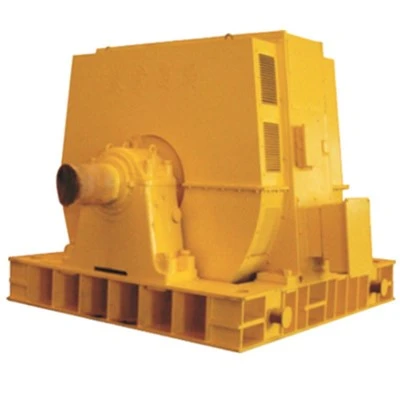
First off, let’s stop what people think: MV motors aren’t just for mines or factories pulling 1000 hp and running 24/7. Wait, yes, they are used there, but that’s not their only gig. Water treatment plants have huge loads – like, the kind that move millions of gallons of water a day, run aeration systems that need constant power, handle sludge processing that’s heavy duty. I’ve seen plant engineers default to low voltage (LV) motors because that’s what they’ve always done, only to have the motors overheat under load, or trip when demand spikes, or need repairs every 18 months instead of 5-7 years. That’s where MV motors come in, but we gotta talk about why they fit, and the gotchas that come with using ’em in water treatment specifically.
Let’s start with the big one: load demand. A typical secondary clarifier aeration system – that’s what keeps the bacteria alive that eats the sewage, right? Those blowers can be 200 hp, 400 hp, even higher. If you run an LV motor on a 400 hp blower, you need huge wires, like 500 kcmil or something, that are expensive to install, have bigger voltage drop issues, and cost more to maintain long term. MV motors (usually 2.4 kV up to 13.8 kV, for those who don’t geek out on the voltage numbers) run way more efficiently at those higher hp loads. I did a cost analysis last year for a plant in Ohio that switched a 350 hp blower from LV to MV – their energy bills dropped $12k a year. No joke, that’s a number that makes ops guys lean in. And efficiency isn’t just about saving cash; water treatment plants are all about regulatory stuff, right? Lower energy use means lower carbon footprint, which helps with EPA compliance. That’s a win-win.
Then there’s the environment. Wait, water treatment plants are gross – constant humidity, occasional splashes of chemicals (chlorine, ammonia, sludge compounds), dust from sludge handling, even occasional flooding in pump pits. LV motors are usually NEMA or IP54 rated, but even that can’t handle being submerged a little, or constant 90% humidity with chemical fumes. Most MV motors we supply are rated IP55 or even higher – they’re sealed way better. I’ve had a customer in Florida dealing with salt air and constant rain on their plant’s outdoor pumps; their LV motors were corroding every two years, MV motors we put in five years ago are still going strong. Also, water treatment has variable loads, right? Like, during peak water usage (summer in Arizona, for example), your pump load jumps, and during low usage it drops. MV motors work great with variable frequency drives (VFDs) – which most plants use now to save energy on variable loads. The combination of MV motor and VFD gives way better torque control at low speeds, so you don’t get that sudden surge when a pump starts, which can damage pipes and motors. I’ve seen LV motors blow fuses on start-up all the time because of torque surges, but MV motors handle that smooth as butter.
But hold on, it’s not all perfect. There are reasons some plant operators stick with LV motors, and those are the things we, as MV suppliers, have to address. First up: up-front cost. A 300 hp MV motor costs about 20-30% more than an equivalent LV motor. That sticker shock is real, especially for small municipalities that are running tight budgets. But here’s the thing: that higher up-front cost pays for itself in 2-3 years with lower energy bills, less maintenance, fewer replacements. I always tell customers to do a lifecycle cost analysis, not just the initial price. Another big one is awareness: a lot of plant engineers don’t know that MV motors are available in the smaller hp ranges now – not just 500 hp and up. We make MV motors as low as 50 hp, which fits smaller pump stations, sludge conveyors, even some aeration blowers. Ten years ago you couldn’t get an MV motor under 100 hp, that’s why people didn’t think about ’em for smaller parts of the plant.
Another gotcha: installation and maintenance. Wait, MV motors need different wiring and switchgear, right? So a plant that’s only ever worked with LV might need a little extra training for their electricians. But most plants already have MV equipment for other parts of the plant – like if they have a large pump or a sludge dewatering system, they probably have a 480 V to 2.4 kV transformer already. So adding an MV motor just means tapping into that existing infrastructure, not building new stuff from scratch. And when it comes to maintenance, MV motors are actually easier to maintain long term because they run cooler – lower operating temperature means less wear on bearings, insulation, all that stuff that breaks motors. I had a customer in Texas that swaps out LV motors every 2 years, we service MV motors every 5 years on average, and that’s just a quick inspection, no full tear-down.
Wait, let’s talk about specific parts of a water treatment plant, because that’s where it gets concrete. Let’s list the common processes: intake pumps (pulling raw water from rivers/lakes), primary treatment (clarifiers, screens), secondary treatment (aeration, clarifiers), tertiary treatment (filtration, disinfection), sludge processing (thickening, dewatering). For intake pumps: if you have a 250 hp pump pulling water from a river, that’s a perfect fit for MV. LV would require huge conductors, voltage drop at the end of long runs (many plants are built near water sources, so runs can be 1000+ feet) is a real issue with LV, MV eliminates that. Aeration blowers: like I mentioned earlier, 200-500 hp is where MV shines. Sludge conveyors and dewatering pumps: these are heavy loads that run constantly, so the efficiency and durability of MV motors make sense. Even smaller parts, like chemical feed pumps or lab equipment? Wait, no, those are still LV, no need to mess with MV there. The key is matching the motor size to the load, and the application to the motor’s rating.
I also want to touch on reliability, because water treatment plants can’t afford downtime. If a motor goes out, that means raw water isn’t being processed, or sewage is backing up, which leads to fines from the EPA, bad press, even public health issues. MV motors have way higher mean time between failures (MTBF) than LV motors. Studies I’ve seen (and that our own data backs up) say MV motors have MTBF of 80,000 hours vs LV’s 40,000 hours for similar hp. That’s double the time between breakdowns. Last year I got a call from a plant in Georgia that had an LV blower die during peak summer, they were paying overtime for electricians working 12 hour shifts to replace it, and the city was facing a $10k a day fine if they couldn’t get it fixed in 72 hours. We had a spare MV motor shipped to them overnight, installed it in 6 hours, no fuss, no fines. That’s the kind of thing that makes ops guys stop asking “can I use MV motors?” and start asking “when can I switch?”
Now, let’s address the elephant in the room: when shouldn’t you use an MV motor? It’s not for every single part of the plant. If you have a 20 hp pump in a small lift station, that’s way overkill for MV. The up-front cost wouldn’t pay for itself in the lifetime of the motor, and the efficiency gain is negligible. If you have a plant that’s super new, with all LV infrastructure and no plan for expanding large loads, sticking with LV makes sense for now. Also, if you have a plant with really limited electrician training that can’t handle basic MV maintenance, you might want to work with a supplier that offers on-site support, which is what we do anyway – we don’t just sell motors, we help with installation, training, troubleshooting.
Wait, another point: sustainability. More and more, water treatment plants are being held to higher standards for energy use, because they’re big energy consumers. The EPA says water and wastewater treatment is 2% of total U.S. energy use. Switching to MV motors can cut that energy use by 10-15% for the motors that are under heavy load, which adds up to big numbers at a municipal level. Also, longer motor life means less waste – you’re not throwing out a motor every 2 years, which is better for the environment too. That’s a big selling point for plant managers who care about more than just budgets.
Let me wrap this up with what I tell every single customer who asks about MV motors for water treatment: it’s not a one-size-fits-all, but for the majority of the heavy-duty, high-load parts of a water treatment plant, MV motors are not just usable – they’re a better, more cost-effective, more reliable option than LV motors. The only times they don’t make sense are for very small loads, or plants that can’t absorb the up-front cost without a clear lifecycle plan.
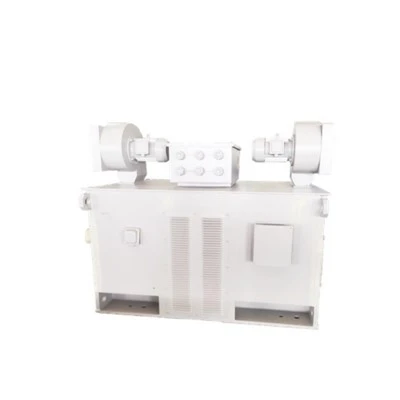
If you’re a plant manager, engineer, or ops supervisor dealing with persistent motor issues, sky-high energy bills, or unplanned downtime, you don’t have to stick with what you’ve always done. I’ve helped dozens of water plants switch over the years, and the feedback is almost always positive. So if you want to run the numbers, ask about compatible VFDs or switchgear, or just get a second opinion on whether MV motors make sense for your specific processes, reach out. I’m here to help, no sales pitch pressure, just real advice from someone who’s worked in this space for a long time.
Large Synchronous Motor References:
- U.S. Environmental Protection Agency. (2020). Energy Efficiency for Water and Wastewater Utilities.
- National Electrical Manufacturers Association (NEMA). (2021). Medium Voltage Motor Application Guide for Water Treatment.
- Water Environment Federation (WEF). (2022). Optimizing Motor Systems in Wastewater Treatment Plants.
- International Electrotechnical Commission (IEC). (2019). Standard for Medium Voltage Rotating Machines for Industrial Applications.
Xian Putai Electric Motor Equipment Co., Ltd.
Putai Electric Motor Equipment Co., Ltd. is one of the most professional mv motor manufacturers and suppliers in China, also supports customized service with low price. Welcome to buy advanced mv motor in stock here from our factory. If you have any enquiry about quotation, please feel free to email us.
Address: No.188 Liuhe Road Yangzhou Jiangsu Province, China
E-mail: sales@putaimotor.com
WebSite: https://www.putaimotor.com/
