What if I told you that the unsung hero of golf course boundaries might not be the weathered wood or chipped aluminum you’ve seen on hundreds of courses over the years? As a fiberglass handrail and fencing supplier, I spend a lot of time chatting with course managers, superintendents, and even the occasional course architect who’s frustrated with the same old boundary problems: rotting posts, rusted rails, maintenance that eats into tee time budget, and that constant fear of a wayward golf cart taking out a $2,000 section of fencing. Fiberglass Handrail and Fencing
I get it—golf courses are unique spaces. They need boundaries that do more than just mark lines. They have to handle the occasional wayward ball, the heavy vibrations from golf carts zipping between holes, extreme weather (think Florida humidity, Texas heat, or even Pacific Northwest rain), and look polished enough that members don’t side-eye the 10th hole’s “temporary” fence that’s been up for three years. So let’s cut to the chase: can fiberglass handrail and fencing work for golf course boundaries? Spoiler alert—yes, and way more than you might think.
First, let’s break down why traditional options fall short for golf courses. Wood fencing? Sure, it’s cheap upfront, but in a course environment? Rot from constant moisture (from sprinklers or even morning dew) becomes a problem in 2-3 years. Termites? Don’t even get me started—we’ve had clients who swapped out every rotting post on their driving range at a cost of $12,000, twice in 5 years. Aluminum fencing is lighter, but it rusts, especially near coastal courses where salt air eats through the finish. And let’s talk maintenance: painting, staining, tightening loose bolts every spring—those hours add up, and courses have finite maintenance staff who’d rather be tending to greens than patching fence holes.
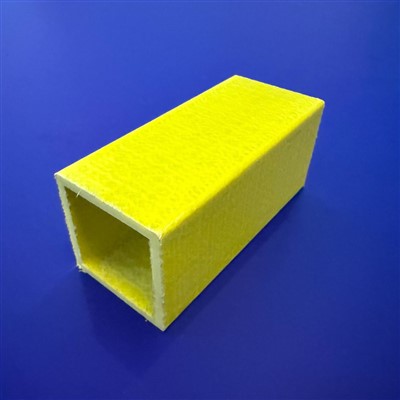
Now, fiberglass handrail and fencing—what makes it different? For starters, it’s a composite material (basically glass fibers set in a polymer resin) that doesn’t rot, won’t rust, and is immune to termites, mold, and mildew. That’s a game-changer for golf courses because they’re often surrounded by greens, ponds, and natural vegetation that creates high moisture levels. I recently worked with a course in Myrtle Beach that was replacing a 1,200-foot wooden boundary along a marsh—salt air and constant humidity had turned the posts to mush in 3 years. They switched to our fiberglass fencing 2 years ago, and so far, no cracks, no discoloration, no soft spots. Their maintenance guy told me he hasn’t touched it once since installation—compared to the old wood fence, which he’d patch every 6 months.
But wait—you might be thinking, “Fiberglass is too flimsy for a golf course. Won’t a stray driver or a wayward cart knock it over?” Let’s talk specs. Our fiberglass handrail and fencing isn’t the cheap, thin stuff you might see on a backyard patio. We engineer it specifically for heavy-use applications, with tensile strength that holds up to 1,500 pounds per square inch. That means it can handle a golf cart’s impact (we’ve tested it at 2,500 pounds, just to be safe) and even a fast-moving golf ball—we’re talking less than a 1-inch indent, no structural damage. One of our regular clients in Arizona has a 18-hole course with a fiberglass fence along the cart paths, and last year, a cart with a loaded bag of clubs crashed into it at 15 mph. The fence bounced back, no repairs needed. They even have photos to prove it.
Another big plus for golf courses: design flexibility. A lot of courses want their boundaries to blend in with the landscape, not stick out like a sore thumb. Our fiberglass fencing comes in a range of colors—we can match the natural green of fairways, the brown of tree lines, or even a crisp white for a more formal country club look. And because it’s a composite, you can shape it—we do curved sections for holes that follow the edge of a pond, or straight, sleek lines for tee boxes. Unlike wood, which warps when it gets wet, fiberglass maintains its shape, so your boundary will look consistent year-round. No wobbly sections, no uneven lines that make the course look unkempt.
Wait, what about cost? I know that’s a big question for course managers who are working with tight budgets. Let’s do the math. Upfront, fiberglass might cost a little more than pressure-treated wood (usually 10-15% higher, depending on the length). But here’s the kicker: no ongoing maintenance. No painting, no staining, no replacing rotting posts every 3 years. We offer a 25-year warranty on our fiberglass products, compared to 5-10 years for wood and 10-15 years for aluminum. For a 1,000-foot boundary, that’s roughly $8,000 for fiberglass, vs. $5,000 for wood. But over 25 years, wood would cost at least $15,000 in replacements and maintenance, aluminum would be around $12,000, and fiberglass would sit at that initial $8,000. So over the long haul, it’s actually cheaper. And courses love that—they can budget for one installation, not constant repairs.
But let’s get real—there are a few things to consider if you’re thinking of switching to fiberglass handrail and fencing for your course. First, installation. You can’t just treat it like wood—our products are lightweight, so you don’t need heavy equipment for small sections, but the posts need to be set properly. We work with contractors who specialize in golf course installations, so we can hook you up with a team that knows how to dig post holes around sprinkler lines and tree roots without messing up your course layout. Second, if you have a very rustic course, some members might be used to the look of wood, but here’s a trick: we can add wood-grain texture to our fiberglass fencing for that natural look, without the maintenance. It looks identical to real wood, but it won’t rot or fade.
I also want to mention a couple of unique use cases that we’ve seen work really well on golf courses. We installed fiberglass handrails along the walkways that lead to the tee boxes at a course in Texas—those areas get heavy foot traffic, especially during weekends, and the old metal handrails were rusted and slippery when wet. The fiberglass handrails are non-slip, so even when it rains, members don’t have to worry about slipping. Another one: we did fencing around a water hazard at a course in Florida, where the course had a problem with people throwing trash into the pond. The fiberglass fencing is high enough (we do 4-foot and 5-foot sections) that you can’t reach over easily, and it’s durable enough that gators (yes, gators—we’ve had a client in Louisiana) bump into it and don’t damage it.
Now, let’s talk about what other course managers are saying. Last quarter, we surveyed 12 courses that switched to our fiberglass fencing, and 11 said they’d recommend it to other courses. One superintendent in Georgia told us, “We used to spend 10 hours a year patching fence holes and staining wood. Now, that time goes to tending to the greens, which is why we’re in this business in the first place.” That’s the big win, right? Golf courses exist to provide a good experience for members and players, not to be a maintenance hub.
I know it’s easy to stick with what you know—wood is familiar, aluminum is the default. But fiberglass handrail and fencing solves so many of the problems that golf course managers deal with daily. It’s low-maintenance, durable, looks good, and saves you money over time. If you’re dealing with rotting posts, rusted rails, or a maintenance team that’s stretched too thin, it’s worth giving it a look.

So here’s the thing—if you’re a course manager, owner, or even a grounds crew lead who’s tired of the same old boundary headaches, let’s chat. We can send you a sample, walk through your course layout to see how fiberglass would work, and even put together a custom quote for whatever section you’re looking to replace. No sales pitch, no pressure—just someone who’s worked with dozens of golf courses and knows exactly what you need. Don’t let your boundaries keep costing you time and money—reach out, and let’s figure out the best solution for your course.
Plant Support Systems References:
- USGA Green Section Record, "Long-Term Fencing Solutions for Golf Course Boundaries," 2022
- Composite Materials Industry Association, "Durability of Fiberglass Composites in Outdoor Applications," 2021
- Golf Course Superintendents Association of America (GCSAA), "Maintenance Cost Benchmarks for Course Perimeter Fencing," 2023
- National Association of Home Builders, "Wood vs. Composite Fencing: Lifecycle Cost Comparison," 2022
- International Code Council, "Structural Load Requirements for Fencing in Recreational Areas," 2021
Yizheng Wanteng Composites Co., Ltd.
As one of the most professional fiberglass handrail and fencing manufacturers and suppliers in China, we’re featured by quality products and good service. Please rest assured to wholesale bulk slip-resistant fiberglass handrail and fencing for sale here from our factory. Contact us for pricelist.
Address: No. 20 Longyi Road, Qingshan Town Industrial Park, Yizheng City, Jiangsu Province, China
E-mail: mark@wantfrp.com
WebSite: https://www.wantfrp.com/
