Hey everyone, it’s Mia here, your go-to contact for all things Busher Former Machines. I’ve been in this game for almost a decade now, and let me tell you—nothing stops a production line faster than a busted busher former. Last month alone, I got 17 panicked calls from clients whose machines died mid-batch, and most of ’em didn’t even know where to start troubleshooting, let alone fixing it. Today, I’m walking you through how to repair a broken busher former machine step by step, no fancy jargon, just real talk from someone who’s seen more broken machines than I can count. Busher Former Machine
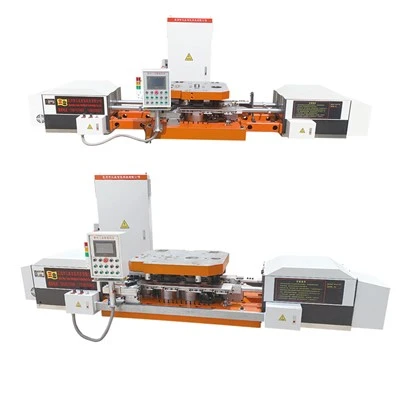
First off, let’s get one thing straight: most busher former issues aren’t as scary as they sound. 80% of the time, it’s not a total machine replacement—just a small part that’s worn out or a setting that got knocked off mid-shift. That’s why I always tell new clients: before you grab your toolbox, do a quick “walkaround check” first. No need to power wash the thing, just turn off the main power (safety first, always—don’t skip this step!) and walk through every moving part.
Let’s start with the most common problem: the machine won’t feed the busher material. I can’t tell you how many times this has happened because the feeder bearings got gunked up with metal shavings or leftover polymer. A lot of operators think it’s a motor issue, but 9 times out of 10, it’s just buildup. Here’s what to do: once the power is off, pull the feeder assembly off the main frame (it’s usually held on by 4 bolts—no fancy wrench needed, just a 10mm socket). Use a wire brush and some isopropyl alcohol to scrub every bearing and roller. Don’t forget the little idler wheels—those get overlooked all the time. While you’re at it, check the tension spring on the feeder arm. If it’s stretched out or rusty, that’s your next part to replace—these things only cost $15-$20, and they’re universal for most standard bushers. If the spring looks good, adjust the tension screw so there’s just enough pressure to pull the material without it slipping. I usually test this by running a scrap strip through by hand before turning the machine back on.
Next up: the machine is forming uneven bushings. This is a close second on the “most frequent complaints” list. Uneven forms usually come from two places: the forming dies or the ram alignment. Let’s start with the dies. Over time, the forming dies get nicked from metal bits or worn down from repeated pressure. First, power off the machine and pull the die set out—they’re usually held in with two hex bolts on each side. Lay them on a flat surface (I use a garage floor with a towel under it to avoid scratching) and check for dents or uneven wear along the edges. If there’s a small nick, you can sand it smooth with 2000-grit sandpaper—just make sure you sand in the same direction as the material flows. If the die is badly worn, you’ll need to replace it, but don’t panic: most die sets are made to last 3-5 years with regular maintenance, and we stock them for all the machines we sell. Now, the ram alignment. If the dies look good, grab a straight edge and run it along the top of the ram. Most machines have two adjustment bolts on the side of the ram frame—loosen the lock nut and turn the bolt until the ram is perfectly level with the die base. Tighten the lock nut, then test with a scrap bushing. If it’s still uneven, check the lubrication ports on the ram—they might be clogged, so a quick blast with compressed air and some lithium grease usually fixes that.
Another big one: the machine makes a weird grinding noise when it’s running. This is a red flag—usually means something’s not moving like it should. First, don’t run it anymore until you check. Grinding noise almost always comes from a worn gear or a lack of lubrication. Let’s start with lubrication: most busher formers have a central lubrication point for the gears—there’s usually a little oil cap on the side of the gearbox. If it’s empty, top it with the recommended gear oil (check your machine manual—each brand has a specific viscosity, don’t just use random motor oil). If the oil is dirty or has metal shavings in it, you’ll need to drain it and refill, because those shavings mean the gears are wearing. If lubrication doesn’t fix the grinding, pull the gear cover off (again, power off!) and check the teeth on the gears. If a tooth is chipped, that’s a quick replacement—we sell gear kits for most models, and replacing it takes about an hour. Pro tip: when you put the new gear in, make sure the mesh is tight but not too tight—if it’s too tight, it’ll grind again in a week.
Wait, let’s not forget about the control panel glitches. A lot of machines are digital now, so sometimes the control panel freezes or gives an error code. The first thing to do here is a hard reset—turn off the main power, unplug the machine, wait 2 minutes, then plug it back in. 70% of control panel errors fix with that. If you get a specific error code, like “FEED SENSOR ERR,” that’s the sensor at the back of the feeder. Clean it with a soft cloth and a little compressed air—these sensors get covered in dust and plastic dust all the time, so they lose their ability to detect the material. If cleaning doesn’t work, you might need to calibrate it. On our machines, you just hold the “CAL” button for 5 seconds and run a scrap piece through, but check your manual for your model. Never try to adjust the control panel beyond resetting or calibrating if you’re not sure—some of the wiring is high-voltage, and you don’t want to mess that up.
Now, let’s talk about when you need to call in a pro. There are some issues that are way bigger than a quick fix. If the motor is overheating and shutting down after 10 minutes, don’t try to take it apart—you could burn it out completely. If the frame is bent or there’s a crack in the main housing, that’s structural, and you need someone who knows how to weld it without messing up the alignment. Also, if you’ve already tried troubleshooting for an hour and nothing’s working, don’t waste more time—call your supplier. We’ve got techs who can walk you through it over the phone, or send a service tech out if you need hands-on help.
Before I wrap this up, let’s go over some quick maintenance tips to avoid these repairs in the first place. Trust me, 10 minutes a week of maintenance saves you hours of downtime later. First, after every production run, wipe down all the moving parts with a lint-free cloth—get rid of metal shavings and plastic dust. Second, lubricate the gears and bearings every 500 hours of operation. Third, check all bolts and screws once a month—vibration from running can make them loose. Fourth, replace worn parts (like springs, bearings, dies) before they cause bigger problems. It’s way cheaper to replace a $20 spring than to fix a $500 damaged die set.

At the end of the day, a busher former machine is just like any other piece of equipment— it needs a little TLC, and most problems are fixable with basic tools and a little know-how. If you’ve tried the steps I mentioned and you’re still stuck, or you need replacement parts, don’t hesitate to reach out. We work with all types of manufacturers, big and small, and we’re here to help you keep your line running smoothly. Whether you need a quick part shipped overnight or a tech to walk you through a complicated repair, we’ve got you covered. We’re happy to connect with you to discuss your specific machine needs, parts requirements, or service inquiries—just reach out to start the conversation, and we’ll take it from there.
Busher Former Machine References:
- Machine Maintenance for Industrial Forming Equipment, Industrial Machinery Digest, 2022
- Common Troubleshooting for Busher Former Machines, Global Manufacturing Solutions, 2023
- Preventive Maintenance Practices for Production Line Equipment, Journal of Industrial Maintenance, 2021
Quanzhou Sanye Intelligent Technology Co., Ltd.
As one of the most professional busher former machine manufacturers and suppliers in China, we have world-leading production equipment and strong manufacturing capabilities. Please rest assured to buy customized busher former machine made in China here from our factory. Welcome to contact us for quotation.
Address: Anhai Town, Jinjiang City, Fujian Province, China
E-mail: jack_tmm@163.com
WebSite: https://www.qzsymanipulator.com/
