Hey everyone – I’m Jake, and for the last 8 years, I’ve been running a pool disinfection system supply business, so I’ve seen every mess in the pool world: green water that turned into a frog hotel, chlorine burns that left swimmers itching, even a guy who dumped a whole bag of shock in at 2am and nearly blew his liner. If there’s one question I get asked way more than “what’s the best LED light for a pool?”, it’s this: “How the hell do I balance pool water and keep the disinfection system working?” Pool Disinfection System
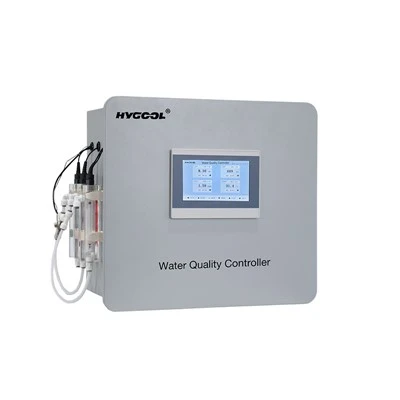
It makes sense, right? A lot of people treat pool balancing and disinfection like two separate chores – like, you shock it, adjust pH, and hope the system keeps up. Spoiler: that’s not how it works. Your disinfection system isn’t just a chlorine tablet float; it’s the backbone of keeping water safe, and if your chemistry’s off, that backbone crumbles. Over the years, I’ve helped residential pool owners, small apartment complexes, even a few local camps figure this out, so let’s break it down like we’re hanging by the pool after a long shift – no fancy jargon, just real stuff that works.
First off, let’s kill a myth real quick: “If my chlorine is high, my chemistry’s fine.” Nah. I’ve seen pools where free chlorine (the stuff that actually kills germs) is 5ppm, but pH is 8.2, and that chlorine is dead – it’s just floating around, not doing a damn thing. Disinfection systems don’t exist in a vacuum; they depend on your water’s chemistry to actually function. Let’s start with the big three: pH, alkalinity, and calcium hardness – the trio that makes or breaks both balance and disinfection efficacy.
Here’s the no-BS rule: pH should stay between 7.2 and 7.6. Why? At that range, chlorine (whether it’s salt-chlorinated from your electrolyzer, liquid chlorine, or even UV disinfection) works 50-80% better than if pH is 8.0 or higher. If pH’s too high, your chlorine turns into a weak, lazy version of itself – it can’t grab onto bacteria, algae, or that random kid’s Band-Aid that floated in last week. If pH’s too low? It’s corrosive – it eats at your liner, your filters, even your system’s metal parts, which means your disinfection system might start leaking or lose power. I once had a client whose salt chlorinator died in 6 months because his pH was stuck at 6.8 – the acid ate through the cell’s metal plates. Cost him $1,200. Ouch.
Then there’s total alkalinity (TA) – that’s your “pH buffer.” Think of TA like the stabilizer for your pH. If TA’s too low (under 80 ppm), pH swings like a pendulum – one day it’s 7.0, the next it’s 8.5, and your disinfection system can never get into the sweet spot. If it’s too high (over 120 ppm), pH gets stuck at the high end, and again, your chlorine’s useless. I usually tell folks to keep TA between 80-100 ppm for residential pools, 100-120 for commercial ones – bigger pools deal with more swimmers, more chemicals, so they need a thicker buffer.
Calcium hardness is the third piece. Most people forget this, but if your calcium’s too low (under 200 ppm), your water is like acid sandpaper – it scratches your liner, etches your tiles, and again, damages your disinfection system’s parts. If it’s too high (over 400 ppm), you get scaling – white crust on your tiles, clogs in your filter lines, and guess what? Scaling can block the cell in your salt chlorinator, so it can’t produce chlorine. I’ve had to clean a dozen salt cells that were caked in scale last summer – half of them needed replacing because the scale was too thick. Keep calcium hardness between 200-400 ppm, and you’re golden.
Okay, so that’s the chemistry base. Now, how does this tie directly to your disinfection system? Because here’s the thing: not all disinfection systems are created equal. The steps are a little different if you’re using salt chlorine generators (what 60% of our clients go for), UV systems, or even ozone with a residual disinfectant. Let’s break down each one, since that’s the part most people skip.
Salt chlorine generators (SCGs) are the most popular for residential pools right now, and for good reason – they’re low-maintenance once set up right. But here’s the catch: your salt level has to be spot-on, and your chemistry can’t be off. SCGs work by sending low-voltage current through salt water (3,000-4,000 ppm of salt) to turn sodium chloride into hypochlorous acid – that’s the active disinfectant. If your salt level is too low, the electrolyzer can’t make enough chlorine, and if it’s too high, it stresses the cell, shortening its lifespan. I’ve seen clients dump 50 lbs of salt because they thought “more is better” – that corroded their pump impeller and their SCG cell in 3 months. Also, back to pH: if pH’s above 7.6, the cell’s efficiency drops by 30% – so even if your salt is perfect, you’re not getting the chlorine you think you are. Last month, a client came to me with green water, said his SCG was “broken” – I tested his pH, it was 8.3, adjusted that, and in 48 hours, his water was clear. He thought we fixed the system, nah – we fixed his chemistry.
Then there’s UV disinfection – that’s the one that uses UV light to kill bacteria and viruses, no chlorine needed. Wait, no chlorine? That’s great, but UV systems still need balanced water. First, UV systems don’t do a residual – meaning once the water leaves the UV bulb, it’s not disinfected anymore. So you still need a tiny amount of chlorine (1-3 ppm) to keep the water safe between swims. But if your pH is off, that residual chlorine doesn’t work. Also, UV bulbs need clear water to work – if you have cloudiness from unbalanced chemistry, the light can’t penetrate, and it’s like having a UV bulb behind a foggy window. I had a hotel client whose UV system had been running 24/7 but had recurring E. coli issues – turns out, their filter was clogged because they never balanced calcium hardness, so the water was cloudy, and the UV light was only reaching 10% of the water. Once they fixed the filter and chemistry, the E. coli was gone.
Ozone systems are another one – they’re used in a lot of commercial pools, and they kill a lot of contaminants fast. But ozone also doesn’t leave a residual, so again, you need a small chlorine or bromine residual. And ozone can react with unbalanced water – if pH’s too high, ozone forms byproducts that can irritate swimmers’ skin and eyes, which defeats the whole purpose. I worked with a water park last year whose guests were complaining about itchy eyes; we checked their chemistry, their pH was 8.6, adjusted it to 7.4, and the complaints stopped. Their ozone system was working perfectly, the pH was just turning the ozone into something annoying.
Now, here’s the step-by-step routine I give all our clients, so you don’t have to guess. This is what works for both residential and small commercial pools:
-
Test your water twice a week during swimming season, once every two weeks in off-season. Don’t use those $1 test strips from the grocery store – they’re often off by 0.5 pH or 50 TA points. Use a liquid test kit (like Taylor K-2006) – it’s $30, lasts a year, and is way more accurate. We even sell them as add-ons when someone buys a disinfection system, because we know how important accurate testing is.
-
Balance your chemistry first, then adjust your disinfection system. Don’t dump chlorine or add salt until pH, TA, and calcium are in the sweet spot. For example: if pH is high, add muriatic acid or sodium bisulfate. If pH is low, add soda ash. If TA is low, add sodium bicarbonate. It takes 24-48 hours for chemicals to fully mix, so test again after that before touching your system.
-
Calibrate your disinfection system after balancing. For salt chlorine generators: once your salt level is 3,000-4,000 ppm and pH is 7.2-7.6, set your SCG output to 50-70% – that’s the sweet spot for most pools. If your pool gets heavy use (like a family of 5, or a public pool), bump it up to 80% during the week, drop to 50% on weekends when less people are swimming. For UV systems: change your bulb every 12 months – even if it’s still lighting up, the UV output drops after a year, so it’s not killing germs anymore. For ozone systems: make sure your ozone generator’s output is matched to your pool size – a 10,000 gallon pool doesn’t need the same output as a 50,000 gallon pool.
-
Maintain the balance and the system. Every month, clean your filter – a clogged filter means water doesn’t circulate, so your disinfection system can’t reach all the water. For salt cells: clean them every 3-6 months (depending on your water) to remove scale. For UV bulbs: wipe them down every 6 months to remove mineral buildup that blocks light. I can’t tell you how many clients call me saying “my system isn’t working” only to find their cell is caked in scale or their filter is full of gunk.
Wait, let’s add a common mistake I see all the time: shock treatments. A lot of people shock their pool every week, but if you shock with a lot of chlorine when pH is high, you’re just wasting money. Shock works best when pH is 7.2-7.6, so shock after you balance, not before. Also, don’t shock at 2am – run the filter for 24 hours after shocking, so the chlorine mixes all the way. I once had a client who shocked, closed the pool, and the next day the chlorine was at 10ppm and the pool was cloudy – he didn’t run the filter, so the shock just sat at the bottom, making cloudiness.
Another thing: swim load. If you have 10 kids in your pool on a Saturday, your pH will spike, your chlorine will get used up faster, and your disinfection system will work harder. So you need to adjust. For salt systems, bump the output up. For UV, maybe run it 24 hours instead of 12. For ozone, increase the output for a day. I always tell clients: if the water smells “chlorine-y” (that strong, chemical smell), that’s not good chlorine – that’s chlorine combined with sweat, sunscreen, and pee (yep, it’s a thing). That’s called combined chlorine, and if your pH is off, your system can’t get rid of it. So if you smell that, test your combined chlorine – if it’s over 0.5ppm, shock the pool, and check your pH.
Now, let’s talk about winterizing, because a lot of people forget about off-season balance. If your pool is closed for winter, don’t just dump a bunch of chlorine and cover it. Balance your water first – pH 7.4, TA 100, calcium 300 – then add a winterizing chemical, and make sure your disinfection system is drained and cleaned. I’ve seen salt cells get ruined in winter because water froze and expanded, and unbalanced water during off-season can cause metal parts to corrode. We send a free winterizing guide with every disinfection system we sell, so that’s covered.
Wait, let’s be real here – I’m not here to sell you a system (well, obviously, but I’m here to make sure you don’t waste your money). So if you’re confused between salt, UV, or ozone, just know: the best disinfection system is the one that works with your water balance, not against it. A lot of cheap systems online don’t account for that – they just say “set it and forget it”. No, that’s not how pools work. You have to balance, you have to adjust, and your system is a partner, not a set-it-and-leave-it thing.
I want to leave you with a quick story that stuck with me. Last year, a guy named Mike from a small cabin resort called me, panicking. His 5 pool cabins all had green water, he’d dumped $2,000 in chlorine, and his salt chlorinator was “dead”. I drove over, tested the water: pH was 8.5, TA was 150, calcium was 450, salt was 2,500. So first, I adjusted his pH, TA, and calcium, added salt to get to 3,500, set his SCGs to 60%. In 3 days, the water was clear. He thought he needed new systems, but all he needed was to balance the chemistry. That’s the thing I want you to take away: balancing water and your disinfection system isn’t two separate tasks – it’s one. If you get that, your pool will be safe, clear, and cheap to maintain.
If you’re looking to upgrade your disinfection system, or you’re not sure if your current system is working with your water, hit us up. We can help you figure out what’s right for your pool, no hard sell, just straight talk. We’ve helped hundreds of folks fix their pool issues by getting the balance and disinfection right, and we want to do the same for you. So don’t stress – just test, balance, adjust, and your pool will be the best spot on the block all summer.
Sauna Equipment References:
- Centers for Disease Control and Prevention. (2022). Maintaining Healthy Pool Water.
- American Red Cross. (2021). Pool Chemistry and Disinfection Guidelines.
- Taylor Technologies. (2023). Pool Water Testing Best Practices.
- National Spa and Pool Institute. (2022). Salt Chlorinator Maintenance and Operation.
- World Health Organization. (2021). Guidelines for Safe Recreational Water Environments: Pools and Similar Water Bodies.
Guangzhou Qiaoyi Water Treatment Technology Co., Ltd.
Guangzhou Qiaoyi Water Treatment Technology Co., Ltd. is one of the most professional pool disinfection system manufacturers and suppliers in China. With abundant experience, we warmly welcome you to wholesale cheap pool disinfection system from our factory. Welcome to contact us for customized service and after-sales service.
Address: Floor 6th, Building 2, No.3, Ketai 1st Road, Baiyun District, Guangzhou 510445, Guangdong Province, China
E-mail: Hygool@hygool.com
WebSite: https://www.hygool.com/
