If you run a metal finishing workshop or a small-scale manufacturing operation, chances are you’ve weighed the cost of hot dip galvanizing against alternative protection methods. But a question I hear consistently, as someone who’s spent 12 years in the hot dip galvanizing equipment supply business, is this: Can I rent hot dip galvanizing equipment instead of buying it? The short answer? It depends on your operation’s size, project scope, and long-term needs. Let’s break this down with the kind of practical, on-the-ground insight I’ve picked up working with job shops, steel fabricators, and utility companies across North America. Hot Dip Galvanizing Equipment
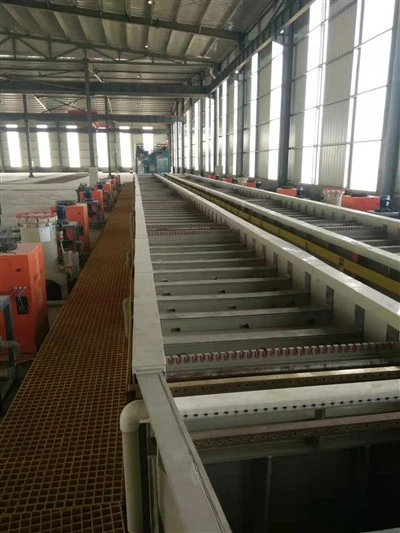
First, let’s get clear on what hot dip galvanizing equipment entails, because it’s not just a single tank or a furnace. A complete galvanizing line for commercial projects includes a pretreatment station (for degreasing, pickling, and fluxing), a molten zinc kettle, a fume extraction system, and a quench tank. Even small, batch-only rigs require specialized components to heat zinc to 840 degrees Fahrenheit safely, manage chemical runoff, and meet OSHA air quality standards. Renting this equipment means you’re not just renting a tank—you’re renting a system that needs installation, maintenance, and compliance checks.
For many one-off or seasonal projects, renting is not just a feasible option—it’s the smartest financial move. Last year, I worked with a medium-sized steel fabricator in Ohio that landed a $2.1 million contract to supply guardrails for a state highway expansion. Their in-house galvanizing line was already running at full capacity on existing commercial orders, and they couldn’t afford to shut down production for 6 weeks to install new equipment. They opted to rent a 10-foot batch galvanizing rig from our inventory, and it worked perfectly for the 1,200 tons of guardrails they needed to process. Here’s why that choice made sense: they didn’t have to tie up $75,000 in capital (the average cost of a mid-sized batch line), they avoided the 4-8 week lead time to order and customize equipment, and they didn’t have to store or maintain a rig they’d only use for a few months.
But let’s not sugarcoat the downsides of renting. The biggest one, for many operations, is availability. Commercial galvanizing rental rigs are in high demand during spring and summer, when highway and infrastructure projects boom. I’ve had customers call me three months ahead of a projected project only to find our smallest batch rigs are already booked. That delay can kill a tight deadline, especially if your operation is counting on galvanizing to deliver finished parts to clients on time. Another hidden cost: rental agreements rarely include installation, operation training, or on-site maintenance. Most rigs require specialized lifting equipment to move, a trained operator to manage zinc temperatures and chemical levels, and daily safety checks to prevent fume leaks or zinc splashes. If you don’t have that expertise in-house, you’ll end up paying an extra daily rate for a technician to run the rig, which can add 20-30% to your monthly rental cost.
Now, what about buying? Buying hot dip galvanizing equipment makes sense if you’re doing consistent, high-volume work. For a fabrication shop that processes 5,000+ tons of steel parts a year, the ROI on a commercial line usually hits within 3-4 years. The catch? You have to be ready to handle the overhead. That includes storing the equipment (a 10-foot galvanizing rig needs about 500 square feet of indoor space, not including workspace for parts), regular maintenance (like cleaning the kettle, replacing heating elements, and testing chemical solutions), and compliance with local environmental regulations. I once worked with a small job shop in Michigan that bought a small batch rig without accounting for the local EPA rules for chemical runoff. They ended up spending $15,000 on a wastewater treatment system they didn’t plan for, which erased any savings they expected from buying instead of renting.
A middle ground, which a lot of operations overlook, is a hybrid approach. For example, if you have a small in-house line but it’s too small to handle a large project, you can rent an additional unit to supplement your existing setup. That’s what a utility company in Pennsylvania did a couple of years back. They had a 6-foot galvanizing rig for processing pole brackets, but when they won a contract for 8,000 utility poles, they rented a 14-foot rig to keep up. That way, they didn’t have to buy a huge piece of equipment they’d only use once a decade, and they avoided the cost of outsourcing the galvanizing work to a third party. Outsourcing, by the way, is another option—but it cuts into profit margins, especially for large projects, because third-party galvanizers charge 20-30% more than in-house processing.
Let’s talk safety, because that’s a non-negotiable in hot dip galvanizing. Molten zinc is extremely dangerous, and any equipment you rent should meet OSHA standards for fume extraction, heat shielding, and emergency shutoffs. A lot of older, used rental rigs on the market don’t have updated safety features, which can put your team at risk and lead to costly fines. When we rent equipment, we include monthly safety inspections and OSHA-mandated air quality tests, which is a big plus for customers who don’t have an in-house EHS manager. If you buy equipment, you’re responsible for those inspections, which can run $2,000-$3,000 a year for a mid-sized line.
Another factor to consider: scalability. If you’re a new operation, it’s hard to predict how much work you’ll take on in the next 5 years. Renting lets you test the market without committing to a large capital investment. I’ve seen too many small shops buy a galvanizing rig, then struggle when the market dips, leaving them with a huge, expensive piece of equipment they can’t afford to run. On the flip side, if you’re growing rapidly, buying might lock you into a setup that’s too small for your needs. Our company works with a startup fabrication business in Texas that started by renting a small batch rig for their first 18 months. Once they hit 10,000 tons a year, they bought a customized 12-foot line, and saved money on rental costs by transitioning to in-house processing.
Wait, but what about the quality of the finish? Hot dip galvanizing relies on precise control of zinc temperature, pretreatment chemical levels, and immersion time. A rented rig that’s poorly maintained can lead to uneven coating, zinc spangles, or adhesion issues, which can ruin your parts. When we rent equipment, we pre-test every rig before delivery, and provide a detailed checklist of maintenance tasks to keep it running at peak performance. For customers who need high-quality finishes (like for architectural parts or marine hardware), buying a consistent, well-maintained line is usually better, but renting a recently upgraded rig can deliver the same results for a short-term project.
Let’s run the numbers to make this concrete. Let’s say you’re a small fabricator needing to process 1,500 tons of steel parts over 3 months. A mid-sized batch galvanizing rig costs $10,000 a month to rent. That’s $30,000 total, plus $5,000 for installation and a part-time operator, bringing the total to $35,000. If you bought a similar rig, it would cost $75,000, plus $15,000 for installation, wastewater treatment, and training, bringing your initial investment to $90,000. Even if you plan to use the rig for 3 more years, that works out to about $2,500 a month, which is way less than the rental cost. But if you only use it for 3 months, buying is a bad bet—you’re essentially paying for 12 years of equipment you’ll never use.
The key takeaway here isn’t that renting is always better than buying, or vice versa. It’s that your choice depends on three things: your project’s timeline, your long-term volume, and your access to expertise. If you have a short-term, one-off project, renting makes financial and logistical sense. If you’re doing consistent, high-volume work, buying will give you a better ROI in the long run. And if you’re in between, a hybrid approach—renting to supplement your existing equipment—might be the sweet spot.
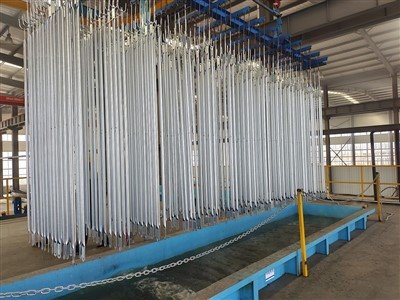
At the end of the day, hot dip galvanizing is one of the most cost-effective ways to protect steel from corrosion, but the equipment choice shouldn’t be a guess. As a supplier, I’ve helped hundreds of operations weigh these factors, and I can tell you that the biggest mistake small to mid-sized shops make is committing to equipment before they fully understand their needs. If you’re unsure whether renting or buying is right for your next project, I’d encourage you to reach out to walk through your specific requirements. We can help you evaluate rental options, compare costs to buying, and make a choice that fits your budget and timeline.
Metal Parts Hot Dip Galvanizing Equipment References
- Occupational Safety and Health Administration (OSHA). Safety and Health Guidelines for Hot Dip Galvanizing.
- National Association of Steel Fabricators (NASF). 2023 Cost Analysis of Metal Finishing Equipment.
- American Galvanizers Association (AGA). Hot Dip Galvanizing Equipment Standards and Best Practices.
- Environmental Protection Agency (EPA). Stormwater Management for Metal Finishing Facilities.
- Market Wire. 2024 Commercial Galvanizing Equipment Rental Industry Report.
Jinzhou Hongri Galvanizing Equipment Co., Ltd.
As one of the most professional hot dip galvanizing equipment manufacturers and suppliers in China, we’re featured by quality products and good price. Please rest assured to buy durable hot dip galvanizing equipment for sale here from our factory. We also accept customized orders.
Address: Yingpan Industrial Park, Taihe District, Jinzhou City. Address: No. 90, Gongwei Street.
E-mail: rsea.jz@163.com
WebSite: https://www.hrgalvanize.com/
