If you’ve ever stood in a grocery store meat section, staring at a perfectly trimmed pork loin, a pre-portioned pack of ground beef, or a shrink-wrapped whole chicken, you’ve probably taken for granted the unseen work that got that meat to the shelf. Most people toss around terms like “meat processing line” and “butcher line” like they’re interchangeable, but after 12 years as a supplier designing and installing custom meat processing systems for small-scale slaughterhouses and large grocery chain facilities, I can tell you they’re two entirely different beasts—one focused on speed, safety, and consistency for high-volume commercial use, the other rooted in the hands-on, customer-focused craft of small-scale meat service. Let me break down exactly what sets them apart, and why that distinction matters for anyone in the meat business. Meat Processing Lines
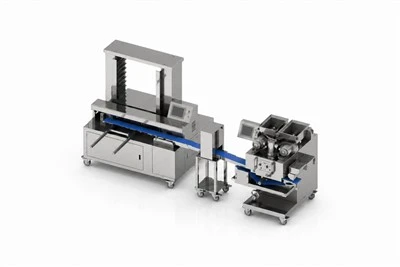
First, let’s start with the core purpose, because that’s where all other differences stem from. A butcher line, at its heart, is a small, customer-facing setup designed for direct interaction with individual cuts, usually in a butcher shop, local market, or small independent slaughterhouse that serves a small, loyal local customer base. I’ve installed dozens of these in places like family-owned butcher shops in rural Ohio and downtown specialty markets in Denver, and every single one shares a key trait: flexibility. Butcher lines are built to handle whole carcasses or large primal cuts, and then adapt on the fly—trimming a little extra fat for one customer, splitting a pork loin into thin cutlets for schnitzel for another, or grinding a custom blend of chuck and brisket for a regular’s favorite burger. There’s no hard, step-by-step sequence; the butcher does what makes sense for the immediate request, with the goal of delivering a personalized, high-quality product that feels like it was made just for you.
A meat processing line, on the other hand, is a high-volume, commercial system built for speed, uniformity, and regulatory compliance, designed to turn thousands of animal carcasses into pre-packaged, shelf-stable products that go to grocery stores, restaurants, or food distributors. When we design these lines for our clients—from mid-sized regional facilities that process 500 head of cattle a week to large national plants handling tens of thousands of hogs daily—every step is mapped out, standardized, and optimized to eliminate waste, reduce food safety risk, and hit exact production targets. There’s no room for “adapting on the fly” here; every cut is identical, every batch of ground beef has the exact same fat content, and every package is sized to fit store shelves. That’s not a flaw in the system—it’s the whole point.
Next, let’s get into the technical components of each line, because that’s where the differences become most concrete. A typical butcher line is made up of simple, hand-operated or semi-manual tools, with minimal automation. At the start, you’ll have a hanging rail, usually with manual trolleys, to move whole carcasses or large primals like quarters of beef from one station to the next. The stations are basic: a sharp, heavy-duty butcher’s saw for cutting through bone, a set of trimming knives for removing fat or silver skin, a small grinder for custom batches of meat, and a manual wrapping station with plastic wrap, butcher paper, and a label printer. Some small butcher lines might have a basic meat mixer if they make sausages, but it’s a small, countertop unit, not a large industrial mixer. There might be a small, walk-in cooler attached to the line to hold meat between steps, but that’s about it for automation. We always advise our butcher line clients to keep their layouts compact—usually 1,000 to 3,000 square feet total—because they don’t need to handle thousands of pounds of meat a day, and they want the space to feel approachable for both the butcher and their customers.
Compare that to a meat processing line, which is a fully integrated, automated system that can span tens of thousands of square feet and is almost entirely powered by conveyor belts, robotics, and specialized processing equipment. A standard beef processing line, for example, starts with stunning and sticking stations, where animals are humanely processed per USDA (or EU FSA, depending on location) regulations, then moves to a de-hiding and evisceration station—this is a critical step that requires precise equipment to avoid contaminating the meat with internal organs or bacteria. From there, carcasses are split into primal cuts by automated band saws, which are programmed to make identical cuts every single time; no human can cut a 100-pound beef quarter into exact 40-pound loin and 60-pound round cuts 100 times in a row, but an automated saw can do it without variation. Next comes trimming, often done by automated trimming machines that use sensors to detect fat content and cut exactly to specification, followed by portioning: for steaks, portioning machines slice loin into 1-inch or 1.5-inch cuts with perfect consistency, every time. Then comes packaging—vacuum sealers, modified atmosphere packaging (MAP) machines that extend shelf life for pre-packaged cuts, and industrial labeling systems that print lot numbers, expiration dates, and nutrition information required by federal food safety rules. The line is controlled by a central PLC (programmable logic controller) that times every step, tracks every carcass, and alerts operators if there’s a problem—like a slow conveyor belt or a faulty sealer—so the entire line runs like a well-oiled machine. We design processing lines to handle 5,000 to 100,000 pounds of meat a day, depending on the client’s needs, and every component is certified for commercial food processing, meeting strict regulatory standards that simply don’t apply to small butcher lines.
Then there’s food safety and regulation, which is probably the biggest reason the two lines can’t be mixed. Butcher lines operate under smaller, less strict regulatory frameworks—usually local health department rules that focus on basic hygiene, like handwashing stations, proper cooling temperatures, and safe handling of raw meat. Because butcher lines are small and produce limited volume, the risk of a large-scale foodborne illness outbreak is minimal, so inspections are usually periodic and less intensive. Meat processing lines, however, are subject to some of the strictest food safety regulations in the world—like the USDA’s Pathogen Reduction and Hazard Analysis and Critical Control Points (HACCP) rules, which require facilities to identify every possible point where contamination can occur and put safeguards in place to prevent it. A meat processing line has multiple mandatory checkpoints: for example, after evisceration, every carcass is inspected by a government veterinarian to make sure no organs are damaged or contaminated; before packaging, every batch of meat is tested for E. coli and salmonella, with results reported to regulatory agencies; and the entire line has mandatory sanitation schedules, with cleaning done every four hours during production and deep cleaning every night, using commercial-grade sanitizers and equipment that doesn’t belong in a small butcher shop. We can’t count how many times we’ve had a potential client come to us, saying “I run a butcher line, can you upgrade it to a processing line?” and we have to explain that the infrastructure, sanitation systems, and regulatory compliance required for a processing line are impossible to retrofit into a butcher line—they’re two different operational models.
Another key difference is output customization and consistency. Butcher lines thrive on inconsistency— that’s their selling point. A butcher can trim a prime rib to have a thicker, more flavorful edge for a regular customer, grind a batch of burger with extra brisket for someone who prefers more fat, or split a pork loin into ¼-inch cutlets instead of ½-inch to make schnitzel. The product is unique, tailored to the individual, and that’s why customers come to independent butcher shops instead of grocery stores. A meat processing line, by contrast, needs absolute consistency. Every pack of ground beef sold to a national grocery chain must have exactly 80% lean and 20% fat, every sirloin steak must be 1.5 inches thick, every whole chicken must weigh between 4 and 5 pounds, no exceptions. If a processing line produces a steak that’s even ¼ inch too thick, it can’t be sold; it’s either discarded or sent to a secondary use like ground beef. That level of consistency is impossible to achieve with hand labor, so processing lines rely on automation, precise programming, and quality control teams that check every batch to ensure it meets specifications. We often work with processing line clients to adjust their line’s programming when a customer changes their needs—like a grocery chain asking for 6-ounce instead of 8-ounce sirloins—but that’s a minor software adjustment, not a last-minute hand cut.
Let’s talk about cost and space too, because that’s a practical consideration for anyone looking to set up either line. A basic butcher line for a small shop might cost $10,000 to $50,000, depending on the size and tools—manual trolleys, a hand saw, basic knives, a small grinder, and a wrap station. It fits in a 1,000 to 2,000 square foot space, and a single butcher can operate it, maybe with one part-time helper during busy weekends. A meat processing line, on the other hand, starts at $500,000 for a small, mid-sized facility, and can go up to $10 million or more for a large, high-volume plant. The line takes up 10,000 to 100,000 square feet of space, and requires a team of operators, maintenance staff, quality control inspectors, and regulatory specialists to run it. We’ve had clients who started with a small butcher line out of their garage, then grew into a processing line when they started supplying multiple grocery stores across the state— that transition isn’t easy, but it’s driven entirely by the difference in their business model.
I want to be clear: neither line is “better” than the other. They serve entirely different markets, and both are essential to the meat industry. Butcher lines keep local economies alive, give customers a personal connection to their food, and produce craft products that you just can’t get at a grocery store. Processing lines feed millions of people every day, deliver safe, affordable meat to everyone from big cities to small towns, and support the national food supply chain. The mistake people make is assuming that if you want to scale from a small butcher shop to a larger operation, you can just upgrade your line—but that’s not how it works. You can’t take a hand-trimmed steak from a butcher line and expect to sell it to 10,000 customers a week, and you can’t take a pre-packaged, standardized cut from a processing line and sell it as a custom, craft product at a local market.
At the end of the day, when we design a line for a client, our first step is to ask: what’s your goal? Are you a small butcher shop serving 50 customers a day, who wants to build a loyal community around handcrafted meat? Then a butcher line is the right fit. Are you a growing facility that wants to supply 10 grocery stores in your region, with consistent, safe products that meet national standards? Then a meat processing line is what you need. We’ve been in this business long enough to know that every client’s needs are unique, and there’s no one-size-fits-all solution.
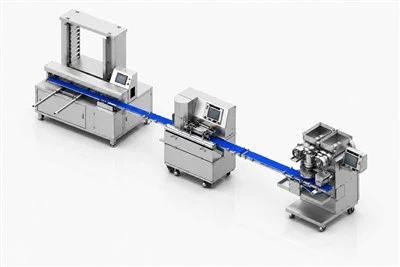
If you’re considering setting up a meat line, whether it’s a small butcher line for your local shop or a processing line to scale your business, we can help you design a custom solution that fits your needs, budget, and regulatory requirements. Our team has installed over 200 lines across North America, and we’ll work with you every step of the way, from initial layout design to post-installation training and support. Reach out to us to discuss your project, and let’s build a line that works for your business.
Puff Pastry Production Line References:
- U.S. Department of Agriculture, Food Safety and Inspection Service. (2022). Hazard Analysis and Critical Control Points (HACCP) System.
- North American Meat Institute. (2021). Meat Processing Line Design and Safety Standards.
- National Retail Federation. (2023). Grocery Store Meat Section Operations and Customer Demand.
- Local Food Association. (2022). Small-Scale Butcher Shop Best Practices and Regulatory Guidelines.
- Food and Agriculture Organization of the United Nations. (2020). Principles for Meat Processing and Safety.
Shanghai Longyu Electro-Mechanic Technology Co., Ltd.
Shanghai Longyu Electro-Mechanic Technology Co., Ltd. is one of the most professional meat processing lines manufacturers and suppliers in China, featured by quality products and good service. Please feel free to wholesale advanced meat processing lines made in China here from our factory. Also, custom service is available.
Address: No.66, Guangfulin East Road, Zhongshan Subdistrict, Songjiang District, Shanghai, China
E-mail: sales4@longyu-sh.com
WebSite: https://www.longyu-sh.com/
