If you’ve ever stood in front of a consumer unit (the metal box that powers your home’s lighting, sockets, and appliances) staring at a blank slot, wondering how to add a miniature circuit breaker (MCB), you’re not alone. As someone who’s worked in the electrical component industry for 12 years, first as an on-site electrician and now as an MCB supplier, I’ve seen this scenario play out hundreds of times—from DIYers tackling their first small project to electricians needing a quick, reliable replacement. The good news is, fitting an MCB is a straightforward task, as long as you follow safety first and stick to the right steps. No fancy tools, no confusing jargon—just clear, actionable advice that’s been tested on jobs large and small. Miniature Circuit Breaker

First, let’s get the basics straight: what an MCB does, and why fitting it correctly matters. An MCB is a safety device that cuts off power to a circuit if there’s an overload (too many appliances drawing too much power) or a short circuit (a fault where live and neutral wires touch). Without a properly fitted MCB, you risk overheating wiring, damaging expensive appliances, or even a fire. That’s why cutting corners here isn’t just bad practice—it’s dangerous.
Before you touch anything inside the consumer unit, stop. This is non-negotiable: turn off the mains power at the supply cutout (the big switch outside your home or in the meter cupboard) and test that the power is off with a voltage tester. I always remind customers of this, even if they think they know what they’re doing—last year, a DIYer saved himself a shock when he double-checked the power was off, just because he followed this rule. Trust me, it’s worth the 10 seconds.
Next, you need to pick the right MCB for your circuit. This is where a lot of people go wrong. MCBs come in different current ratings (the number that tells you how much power they can handle) and types (B, C, D, depending on the application). For domestic use, lighting circuits almost always need a B-rated MCB, usually 6A or 10A, and socket circuits need a 16A or 32A B-rated MCB. Check the existing MCB on your other circuits to match the rating—if you’re adding a new socket for a garage, a 32A MCB is standard. As an MCB supplier, we make this easy for customers: each MCB is clearly marked with its rating and type, so there’s no guesswork. Just don’t grab the first MCB you see—mismatched ratings can leave you without protection, or trip unnecessarily.
Now, let’s talk about the consumer unit itself. Most modern consumer units have empty slots designed for plug-in MCBs, which are way easier to fit than older screw-in types. If your consumer unit doesn’t have plug-in slots, you’ll need to screw the MCB into the busbar—we offer both options, so just mention your consumer unit type when you order. Before you insert the MCB, locate the main busbar (the thick metal strip that distributes power to all the circuit breakers) and the neutral bar (the other thick strip for neutral wires). You’ll also need to prepare your new circuit’s wires: cut them to the right length, strip about 10mm of insulation from the ends, and make sure they’re undamaged.
Here’s the step-by-step for fitting a plug-in MCB, which is the most common setup in homes today:
- Open the consumer unit’s door and locate the empty slot. Most slots are numbered, so pick the next available one (don’t force it—if it feels tight, check there’s no old MCB still in place or a loose wire blocking it).
- Align the MCB’s bottom clip with the gap in the busbar. The MCB only fits one way—you’ll feel it click into place when it’s correctly seated. Give it a gentle tug to make sure it’s secure; if it moves, the clip isn’t engaged right.
- Run your new circuit’s live wire from the appliance, socket, or light to the MCB’s terminal. Use a flathead screwdriver to loosen the terminal screw, insert the stripped wire end, and tighten the screw until it’s firm (don’t overtighten—you’ll strip the plastic or damage the wire).
- Next, run the neutral wire to the neutral bar. Neutral wires don’t connect to the MCB—they link directly to the neutral bar, so make sure you’re putting it in the right slot there. Again, tighten the neutral screw securely.
- If your new circuit has an earth wire, connect that to the earth bar too (another separate strip inside the consumer unit). Same rule: strip the end, tighten the screw, no loose wires.
- Double-check every connection before you close the unit: make sure no stray wires are hanging loose, all terminals are tight, and the MCB isn’t touching any other components that could cause a short.
Wait a second—what if you’re dealing with an older consumer unit that doesn’t have spare slots? Don’t panic. You might need to remove an existing MCB to make space, but only if that circuit isn’t in use, or you upgrade the existing MCB to a higher rating if needed. Never remove an MCB for a circuit you’re still using. If you’re unsure, call a qualified electrician—we always advise customers to err on the side of caution, especially with older installations.
Once the MCB is fitted, test it to make sure it works. Turn the mains power back on, then flip the new MCB to the “on” position. Then test the circuit: plug in a lamp or a small appliance, turn it on, and make sure it works. If it doesn’t, double-check your wire connections—chances are a loose wire is the issue. You can also test the MCB’s trip function: flip it to “off” manually, then try turning it back on. It should click into place smoothly. To test it properly, you can simulate an overload: plug in a heater and a microwave on the new circuit, then turn them both on. The MCB should trip quickly, cutting power, which means it’s working as intended. If it doesn’t trip when it should, it’s a faulty MCB, and we’ll replace it free (part of the quality guarantee we offer all our customers).
A few common mistakes to avoid, based on years of feedback from electricians and DIYers:
- Don’t use a higher-rated MCB than your circuit can handle. For example, if your wiring is rated for 10A, a 32A MCB won’t trip if there’s an overload, leading to overheating and a fire hazard.
- Don’t skip testing the connections. A loose wire is the number one cause of MCB failure and power issues. We’ve had customers send photos of their wiring and ask us to check it—never hesitate to reach out for a second opinion.
- Don’t force an MCB into a slot. If it won’t fit, you’re either using the wrong type of MCB or the slot is blocked. Stop, troubleshoot, or ask for help.
As an MCB supplier, we don’t just sell components—we want customers to feel confident that what they’re buying is right for their job. That’s why we include a simple guide with every order, and our team is always here to answer questions, whether you need help picking the right MCB, verifying your connections, or troubleshooting a trip issue.
If you’re planning to fit an MCB for a new circuit, replace a faulty one, or upgrade your consumer unit, don’t go it alone if you’re unsure. Electrical work is serious, and even a small mistake can have big consequences. But if you’ve got some experience, follow those safety steps, and pick the right MCB, you’ll have your circuit up and running in no time.
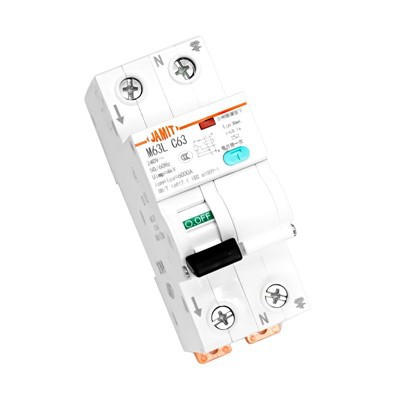
For tailored advice on choosing the right MCB for your home, project, or consumer unit, or to place an order for bulk or single components, get in touch with our team today. We’re here to make your electrical projects safe, simple, and reliable.
Residual Current Circuit Breaker References
- IET Wiring Regulations (BS 7671): Requirements for Electrical Installations, 18th Edition
- National Electrical Code (NEC): Article 240 for Overcurrent Protection Devices
- Electrical Safety Council: Consumer Unit and MCB Installation Guidelines for Domestic Properties
- International Electrotechnical Commission (IEC 60898): Miniature Circuit Breakers for Household and Similar Installations
Tianjin JMT Electric Co., Ltd.
Tianjin JMT Electric Co., Ltd. is one of the most reliable miniature circuit breaker manufacturers and suppliers in China, also supports customized service. Please feel free to buy advanced miniature circuit breaker made in China here from our factory.
Address: East Side of Road No.6, Jinghai Economic Development Zone, Tianjin
E-mail: wangbing@tj-jamit.com
WebSite: https://www.jamit-electric.com/
