If you’ve ever stood in a supermarket aisle staring at two seemingly identical thin, circular papers—one labeled “filter paper” and the other “coffee filter”—you’re not alone in wondering what sets them apart. As someone who’s worked in filter paper supply for over a decade, I’ve lost count of the times baristas, lab assistants, and even home brewers have asked me why they can’t just grab a coffee filter for their lab work, or a sheet of filter paper for pour-over coffee. The truth is, while they might look similar at first glance, their design, material, and intended use are worlds apart—and using the wrong one can lead to messy, inefficient, or even dangerous results. Filter Paper
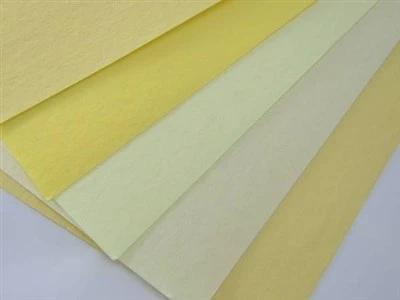
Let’s start with the basics: both are porous paper products designed to separate solids from liquids, but that’s where the similarities end. To understand why, it helps to break down each product from its raw materials to its manufacturing process, and then the practical implications of those differences.
First, material composition. Filter paper, the core product we supply as a filter paper vendor, is almost always made from 100% cellulose cotton linters or a blend of cellulose and glass fibers, depending on the grade. Cotton linters are the short fibers left on cotton seeds after ginning—they’re longer and more uniform than the wood pulp used in many other papers, which gives filter paper its strength and consistent porosity. For specialized lab grades, we also offer glass fiber blends; these are resistant to high temperatures, harsh chemicals, and can filter very fine particles that cellulose alone can’t catch.
Coffee filters, on the other hand, are primarily made from bleached wood pulp. Most mass-produced coffee filters use softwood or hardwood pulp that’s been processed to be thin and flexible, with a slightly rougher texture. Some premium pour-over coffee filters do use unbleached cellulose, but even then, they’re designed to be lightweight and to let water flow quickly to extract coffee flavors. That difference in material might seem small, but it has big consequences for what each can do.
Porosity is the next key distinction. Porosity refers to the size of the tiny holes in the paper, which determines which particles get trapped and how fast liquid passes through. Filter paper comes in a range of porosities, categorized by “ash content” and “retention rate”—the size of particles it can hold back. For example, we supply qualitative filter paper (for general lab work like separating precipitate from a chemical reaction) with a pore size of 10 to 25 micrometers, and quantitative filter paper (for precise lab measurements, like weighing dried solids) with a tight pore size of 2 to 5 micrometers. There are also slow-flow grades for fine particles and fast-flow grades for larger ones. This variability is intentional: lab workers need a filter tailored to their specific task, whether that’s filtering bacteria from a water sample or removing sand from a chemical solution.
Coffee filters, by contrast, have a much more limited range of porosity. Standard flat coffee filters (used in drip machines) have a pore size of around 20 to 30 micrometers—just large enough to let dissolved coffee oils and water through, but small enough to trap coffee grounds. Cone-shaped pour-over filters are even more porous, around 30 to 40 micrometers, to speed up the brew time. The goal here is speed and flavor extraction, not precision. A coffee filter doesn’t need to catch tiny, invisible solids because coffee grounds are relatively large, and any small particles that slip through are considered part of the “crust” or just harmless sediment in a cup of coffee.
Strength and chemical resistance are where the gap widens even more. Filter paper, especially lab-grade versions, is designed to hold up under stress. When you’re filtering a heavy precipitate, like barium sulfate from a chemical reaction, the paper has to support the weight of the solid and the liquid without tearing. Our quantitative filter paper, for instance, is treated with hydrochloric acid and hydrofluoric acid during manufacturing to remove all traces of ash, which makes it stable at high temperatures when you burn off the paper to weigh the collected solid. It’s also resistant to mild acids and bases, so it won’t break down when used with common lab chemicals.
Coffee filters, on the other hand, are made for a very different set of stresses. They need to be flexible enough to fit into a coffee maker basket or a pour-over cone, and strong enough to hold a batch of wet grounds without tearing. But they’re not designed to handle harsh chemicals or extreme temperatures. If you put a coffee filter in a lab to filter a strong acid, it will dissolve almost immediately because the wood pulp isn’t treated for chemical resistance. Even boiling water can break down some unbleached coffee filters over time, which is why baristas are told to replace filters regularly in high-heat brewing setups.
That leads to the biggest practical difference: intended use. Let’s test this with real-world examples. If a home brewer uses a standard coffee filter for their gravimetric analysis lab work, what happens? The coffee filter’s large pores won’t catch the tiny precipitate particles, so their final weight measurement will be off—invalidating their entire experiment. If a lab tech uses a sheet of coarse filter paper for pour-over coffee, the fine coffee grounds will slip through, making a muddy, gritty cup that’s undrinkable. Even something as simple as filtration speed works against you: a lab-grade filter paper with tight pores will take twice as long to brew coffee as a coffee filter, because it’s designed to slow liquid down to catch small particles, not extract flavors quickly.
There’s also a misconception that coffee filters are just “small filter paper,” but that’s wrong. We’ve had customers try to use our filter paper as coffee filters before, and the feedback is consistent: it makes a slow, flat cup of coffee with none of the bright flavors of a good pour-over. The material and porosity weren’t made for that task, so the extraction process is all off. Conversely, a lab worker who grabs a coffee filter for a quick home filtration project might find it works for separating fruit pulp from juice, but it’s not precise enough for any lab work.
As a filter paper supplier, we’ve spent years refining our products to meet specific needs, whether that’s a high-school science class needing affordable qualitative filter paper, a pharmaceutical lab needing sterile glass fiber filters, or a water treatment plant needing large-format filter papers for testing. Our customers rely on us because they know our products are tested to perform consistently, which is critical in industries where results can’t be off by even a few milligrams or a single missed particle.
That consistency is another advantage our filter paper has over coffee filters. Coffee filters can vary a lot between brands and even batches. Some cheap coffee filters have uneven pores, leading to inconsistent brew times, while premium ones are more uniform, but still not designed for lab work. Our filter paper undergoes quality control checks at every step of manufacturing to ensure porosity, strength, and ash content are within exact specifications—something that’s never a priority for coffee filter brands, whose main focus is cost and fit for coffee makers.
So, when should you use which? If you’re doing lab work, testing water, filtering chemicals, or any task that requires precise separation of solids from liquids, filter paper is the only choice. It’s engineered for accuracy and durability. If you’re brewing coffee, making infused oils, or filtering food like broth, a coffee filter works just fine—and it’s designed to give you the flavor and consistency you want for that task. There’s no need to force one to do the other; each product serves a unique purpose.

At the end of the day, the difference between filter paper and coffee filter comes down to intent. One is built for precision and resistance, the other for convenience and flavor. For over a decade, we’ve supplied filter paper to customers who rely on that precision every day, and that’s a responsibility we take seriously. If you’re in need of filter paper for lab work, industrial testing, or any other filtration project that demands reliability, we’re here to discuss your requirements and find the right product for you. Don’t settle for a substitute that can’t get the job done right—reach out to us today to discuss your filter needs.
PCB Hot-press Paper References:
- “Filter Paper: Properties and Applications,” Whatman, 2022.
- “Coffee Filter Materials and Porosity in Specialty Brewing,” Journal of Food Science and Technology, vol. 58, no. 3, 2021, pp. 890-897.
- “Cellulose vs. Glass Fiber Filters for Laboratory Filtration,” Fisher Scientific Technical Bulletin, 2023.
- “The Science of Porosity in Paper Products,” TAPPI Journal, vol. 19, no. 6, 2020, pp. 45-52.
- “Coffee Brewing: The Impact of Filter Type on Extraction,” Specialty Coffee Association of America, 2022.
Shanghai Rongying Industrial Co., Ltd.
As one of the most professional filter paper manufacturers and suppliers in China, we’re featured by quality products and good price. Please rest assured to wholesale customized filter paper from our factory. If you have any enquiry about quotation and free sample, please feel free to email us.
Address: Jiahua Business Center C building 204 Room, No.808 Hongqiao Road, Xuhui District, Shanghai, China
E-mail: info@shryspecialtypaper.com
WebSite: https://www.woolpaper.com/
