If you’ve ever walked the floor of a manufacturing, materials research, or specialty production facility, you’ve likely seen a box furnace tucked into a corner or anchored to a concrete pad. Box furnaces are most widely known for high-temperature tasks—sintering ceramics, annealing metals, heat treating components, even firing kiln-ready ceramics to vitrification. But here’s a question we get all the time at our shop: can a box furnace be used for drying? It’s a great one, and the answer isn’t a simple yes or no; it’s rooted in how box furnaces work, the needs of your specific drying task, and the compromises that come with choosing one tool over another. Box Furnace
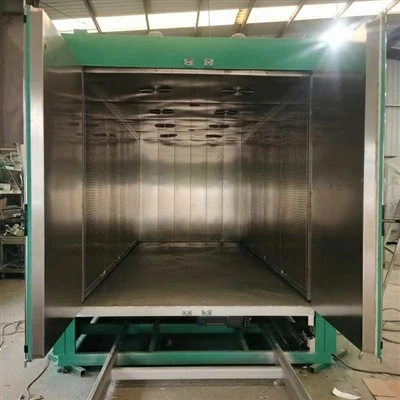
Let’s start with the basics, no overly technical jargon—just what you need to know. A box furnace is a stationary, enclosed heating chamber, usually lined with refractory brick or high-temperature fiber insulation. It uses electric resistance elements (sometimes gas, but electric is far more common for precise, low-to-mid-temperature work) to heat the chamber evenly, with temperature controls that can hit anywhere from 100°C up to 1,800°C or more, depending on the model. Unlike conveyor dryers or vacuum ovens, box furnaces are not built to move air continuously in and out—their design prioritizes consistent, uniform heat inside the chamber, not air exchange for moisture removal.
Drying, at its core, is the process of removing moisture from a material, whether that’s water, solvents, or residual chemicals. For most drying jobs, you need two key things: heat to raise the material’s temperature enough to turn moisture into vapor, and a way to carry that vapor away from the material, so it doesn’t condense back. That’s where things get interesting. A standard box furnace’s closed chamber means moisture lingers inside, especially if you’re working with large or thick parts. So, can it work? Sometimes, but you have to adapt it to the task.
Let’s break down when a box furnace makes sense for drying, and when it doesn’t. First, the wins. If you’re drying heat-stable, low-moisture materials that don’t release volatile organic compounds (VOCs) or react to rapid air flow, a box furnace can be a cost-effective choice. Take, for example, ceramic greenware—unfired clay that still holds excess water from the shaping process. Most greenware needs to dry slowly to prevent cracking; a box furnace’s ability to maintain a consistent, low temperature (100°C to 150°C, well below its typical max heat) makes it ideal here. We supply a lot of box furnaces to ceramic studios and small production shops for this exact use. The uniform heat avoids hot spots that can cause uneven drying, and if you drill a small vent hole in the chamber door, you can let moist air escape slowly. It’s far cheaper than a purpose-built conveyor dryer for small batches, and easier to control than a tabletop oven.
Another common use: drying metal powders or raw materials for metallurgy or pharmaceutical production. If you’re working with aluminum oxide powder or calcium carbonate, these materials can handle slow, steady heat. A box furnace’s temperature accuracy (we build our furnaces with ±1°C control for low-temperature runs) means you don’t risk overheating the powder during drying, which would ruin its particle structure. For small-batch labs or prototype runs, swapping a box furnace between high-temperature heat treating and low-temperature drying is way more versatile than buying a separate dryer. It’s a two-in-one tool, which is a huge plus for small operations with limited floor space or budgets.
But here’s where the limitations kick in, and it’s important to be honest about them. First, air flow. Most purpose-built dryers force air to circulate, but a standard box furnace has very little forced air. That means if you’re drying a thick part, like a metal casting with a deep internal cavity, the air inside the cavity stays still, and moisture gets trapped. You’ll end up with surface dryness but internal moisture, which is a problem if you’re going to fire that part later—trapped moisture will turn to steam during high heat and crack the piece. For this, we recommend modifying the furnace slightly: adding a small, low-speed circulating fan inside the chamber to gently move air around parts. It’s a simple adjustment we make for many customers, but it’s not a standard feature on every model.
Second, volatile materials. If you’re drying something that releases solvents, resins, or VOCs—like a wet composite part or a polymer-coated component—a standard box furnace can be dangerous. Those fumes will build up inside the closed chamber, and if they’re flammable, they can create a fire or explosion risk. Even if they’re not flammable, they can condense on the furnace’s heating elements, shortening their lifespan and ruining your future high-temperature runs. In these cases, a box furnace is not a good choice. Purpose-built dryers have exhaust systems to vent fumes outside, which a standard box furnace doesn’t. We always tell customers: if your drying material releases fumes, skip the box furnace and go for a dedicated drying oven or dryer.
Another limitation: batch size. Box furnaces work great for small to medium batches, but if you’re drying hundreds of pounds of material at once, a standard box furnace is too small. Their chambers are designed for precision, not high-volume air exchange. You’ll end up with uneven drying across the batch, since the center of the pile will trap moisture. For large-volume drying, a conveyor dryer or a cabinet dryer with continuous air flow is a better fit.
Now, let’s get practical: if you’re considering a box furnace for drying, what should you look for, and how to use it right? First, pick a model with good low-temperature control. Most of our box furnaces can run as low as 50°C, which is perfect for slow drying. Avoid older models with imprecise thermostats—you don’t want to crank the temperature too high and accidentally bake the material instead of drying it. Second, plan for venting. Even if you’re drying a heat-stable material, moist air needs an exit. We recommend a 1- to 2-inch vent hole in the door, capped with a screen to keep dust out, which lets excess moisture escape without letting too much cold air in. Third, don’t overload the chamber. Stack parts with space between them, so air can circulate around each one. Overloading causes uneven heat and trapped moisture, which defeats the purpose.
We’ve seen customers get this wrong: a bakery supply shop tried using a standard box furnace to dry raw grain for animal feed. They crammed 50 pounds of grain into the chamber, cranked the temperature to 120°C, and didn’t add any venting. The grain dried on the surface but molded inside, and the moisture that couldn’t escape rusted the heating elements. That’s a avoidable mistake—if they’d spaced the grain in thin layers, added a vent, and let the furnace run slow, it would have worked perfectly.
What about vacuum drying? Can a vacuum box furnace be used for that? Absolutely. A vacuum box furnace removes air from the chamber, which lowers the boiling point of water, so you can dry materials at even lower temperatures (as low as 40°C) without damaging heat-sensitive items, like pharmaceutical ingredients or food products. We supply vacuum box furnaces for exactly this use, especially for customers who need to dry materials that would melt, burn, or degrade at standard drying temperatures. The vacuum also pulls moisture out faster than ambient pressure, so drying time is shorter. That’s a game-changer for small-batch, heat-sensitive applications.
So, to circle back to the original question: can a box furnace be used for drying? The short answer is yes, but only when it’s the right tool for the job. It works best for small to medium batches of heat-stable, low-VOC materials, where versatility (using the same furnace for drying and high-temperature processing) is a priority. It’s not a replacement for purpose-built dryers for large volumes, heat-sensitive materials, or fume-releasing substances.
If you’re sitting here thinking, “This could work for my operation,” we’re here to help. We build box furnaces tailored to both high-temperature processing and low-temperature drying, with options for venting, fan additions, and vacuum functionality. We’ve worked with ceramic studios, metallurgy labs, small manufacturing shops, and research institutions to modify box furnaces for drying tasks, and we can help you figure out if it’s a fit for your specific needs. Whether you’re drying greenware, metal powders, or prototype parts, we can walk you through the right model, the necessary adjustments, and the best practices to get consistent, dry results without damaging your furnace or your materials.
Don’t guess if a box furnace is right for your drying task. Our team has decades of experience helping customers match the right heating solution to their needs. Reach out to us to discuss your specific process, get personalized recommendations, and learn more about how our box furnaces can work for both your drying and high-temperature processing needs.
Tempering Furnace References
- ASTM International. (2021). Standard Test Methods for Drying of Ceramic Greenware. ASTM C372-21.
- Schmidt, R. (2019). Industrial Heating Processes: Fundamentals and Applications. Industrial Press, Inc.
- Perry, R. H., & Green, D. W. (2008). Perry’s Chemical Engineers’ Handbook, 8th Edition. McGraw-Hill Education.
- International Organization for Standardization. (2020). Heat Treatment Furnaces – Vocabulary and Specification, Part 2: Box Furnaces. ISO 13585-2:2020.
Jiangsu Fangwei Furnace Industry Co., Ltd.
Jiangsu Fangwei Furnace Industry Co., Ltd. is one of the most professional box furnace manufacturers and suppliers in China. With abundant experience, we are committed to providing high quality customized products with competitive price. Please feel free to buy advanced box furnace made in China here from our factory.
Address: No.168, HuangNian Bridge, DaoShu Town, Danyang City, JiangSu Province, China
E-mail: fangwei@fwfurnaces.com
WebSite: https://www.fwfurnaces.com/
