Hey there, if you’re in the market for foil slitting machines (or just curious what these bad boys can actually handle, no fluff here), you’ve come to the right spot. I’ve been selling foil slitting machines for over 8 years now, and let me tell you—this isn’t just a “cut metal thin stuff” machine. It’s way more versatile than most folks think, and I’ve seen it slit materials I never would’ve guessed when I first started out. No stuffy jargon, just real-world stuff I deal with every day. Foil Slitting Machine
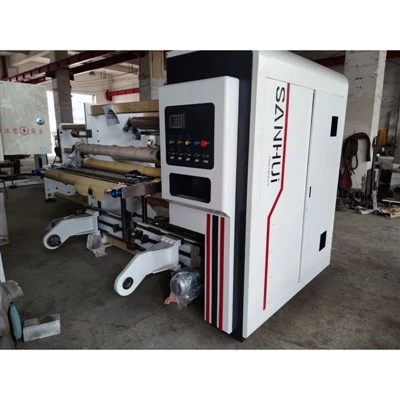
First off, let’s get the most obvious one out of the way: aluminum foil. But wait, I’m not talking about the flimsy stuff you use to wrap leftovers in your kitchen. Industrial aluminum foil is the real deal—think ultra-thin, like 6 microns thick, or even thicker foil used for food packaging, insulation, or automotive parts. Here’s the thing: a good foil slitting machine doesn’t just snip it; it handles foil that’s temperamental. Aluminum foil wrinkles if you stretch it too much, or gets static cling that messes up the slitting path. The machines we sell have tension controls that’s dialed in specifically for aluminum—so you don’t end up with a stack of crumpled mess when the roll comes off. I had a customer last year who used to buy cheap off-the-shelf machines and waste 10% of his aluminum foil every run. After switching to ours? That dropped to less than 1%. Worth the upgrade, right?
Next up: copper foil. This is big in electronics—think the thin copper tape that goes into printed circuit boards (PCBs), lithium-ion batteries, even solar panels. Copper is softer than aluminum, but it’s way more conductive, and it has a weird habit of sticking to itself if it’s static-charged. Some customers ask me if a foil slitter can handle both aluminum and copper, and the answer is yes—as long as you adjust the blade and tension settings. I’ve got a small business owner who slits 12-micron copper foil for DIY battery packs, and he swears our machine lets him cut it down to 5mm widths without any fraying. The key here is the slitting blades: we use precision-ground alloy steel blades that don’t dull too fast on copper, which saves him money on blade replacements.
Then there’s steel foil. Wait, steel as in the hard stuff? Yeah, thin gauge steel foil—usually 25 microns up to 200 microns thick. This isn’t the foil you wrap sandwiches with; it’s used for things like fuel tank liners in cars, industrial filters, and even some medical devices. Steel foil is way tougher than aluminum, so you need a machine with more power and sturdier parts to cut it cleanly. I had a customer in the automotive industry who was using a bandsaw to slit steel foil before, and he was wasting a ton of material from the rough cuts. Our foil slitting machine cuts it so smooth he barely has to sand the edges. Bonus: steel foil doesn’t wrinkle as easily as aluminum, but it’s heavier, so the machine’s unwind and rewind systems have to handle that weight without stretching the foil.
Now, here’s one most people don’t expect: plastic film coated with foil. Yeah, it’s not pure foil, but it’s a composite, and our slitting machines handle this all the time. Think of the packaging for chips, candy, or even frozen dinners—those wrappers have a thin layer of foil bonded to a plastic (like polyethylene or PET) to keep light and moisture out. The problem with these composites is that if you don’t adjust the machine’s tension right, the foil layer can peel off the plastic mid-slit. We tweak the machine’s tension rollers so the plastic and foil move at the same speed, so they stay bonded. I’ve got a snack packaging company as a client, and they run 500lb rolls of this composite every day—our machine’s been running for 3 years straight with barely any downtime on these jobs.
Another underrated material: aluminum laminate. This is different from the coated plastic stuff—it’s multiple layers of aluminum glued together, or aluminum plus other materials like paper or fabric. It’s used for things like insulation for buildings, or even military tents that need to be waterproof and reflect heat. Laminates are thicker and more rigid than single-layer foil, so they need a machine with a wider slitting range. We’ve had customers slit 1mm thick aluminum laminate for HVAC duct insulation, and the machine handles it without tearing the laminate. The blades we use for laminates are a bit sharper than for thin foil, too—since the laminate has different layers, a dull blade will tear through the layers unevenly.
Wait, what about specialty foils? Like tin foil? Yeah, that’s just another type of metal foil, but it’s softer than aluminum, so it’s good for things like decorative items or some medical packaging. Then there’s nickel foil—used in aerospace and batteries, it’s super thin (like 10 microns) and highly resistant to corrosion. A friend who works in aerospace told me they use our machines to slit nickel foil for satellite components, because any misalignment or fraying would mess up the satellite’s systems. That’s a wild use case, right? I never thought I’d be selling a slitting machine to a space company, but there we go.
Now, let’s talk about what doesn’t work? Wait, no—actually, most foil slitting machines can be adjusted, but there are exceptions. For example, thick metal sheets (like over 1mm) are too heavy and rigid for a standard foil slitter—you’d need a sheet slitter instead. And really sticky materials, like adhesive-backed foil tape? You have to be careful with that, because the adhesive can gum up the blades. We’ve got an optional system for that—anti-stick coatings on the blades and tension rollers—to handle adhesive materials, which is a big one for folks making duct tape or packaging tape.
Let me throw in a quick real story here: A customer from a small foil processing shop reached out to me last year, saying his old machine could only slit aluminum, and he was losing clients who needed copper and steel. He was tired of sending work out to other shops and paying 30% more. We showed him how to adjust our machine’s settings for copper, and he started taking those jobs. Within 6 months, his revenue went up 25% just because he could handle more materials. That’s the thing about these machines—they’re not one-trick ponies.
Now, I know a lot of people reading this might be shopping around for a foil slitting machine, and they’re worried about compatibility. Let me be straight with you: if you tell me exactly what materials you’re planning to slit, I can tell you if our machine can handle it. No guessing, no fluff. We customize a lot of our machines—adding extra tension controls, different blade types, even specialty unwind systems—based on what a customer needs. For example, if you’re slitting ultra-thin (under 10 micron) foil, we can add static eliminators to keep the foil from sticking together. If you’re slitting thick laminates, we can upgrade the machine’s frame to be sturdier so it doesn’t flex when cutting.
Here’s the thing I tell every potential customer: don’t just ask “what materials can this machine slit?” Ask about the specs, and if the machine can handle your specific roll size and width. A machine that slits 12-inch wide rolls won’t work if you’re using 60-inch wide rolls, for example. And tension is everything—bad tension leads to wrinkles, tears, and wasted material, which is money down the drain. I’ve had customers come to me after buying a cheap machine from a guy on a marketplace, and they’re wasting 15-20% of their material. Our machines cut that waste to 2% or less, which pays for itself in a few months.
Another common question: can you slit thin foil into tiny widths? Like, down to 1mm? Yeah, as long as the blade is precision-ground. We use blades that are sharpened to a micro-angle, so they make clean cuts even on super narrow widths. A lot of cheap machines have blades that are too blunt, so when you cut narrow widths, the foil frays or bends. I had a customer who makes tiny electronic components—he needed 2mm wide copper foil strips—and our machine cuts them perfectly, no frays.
Now, let’s wrap this up. If you’re in the business of processing foil—whether it’s packaging, electronics, automotive, aerospace, whatever—this machine can handle way more than just plain aluminum. The key is matching the machine’s features to the materials you’re working with. But if you’re not sure, that’s okay—just reach out to us, tell me what materials, thicknesses, and widths you’re dealing with, and I’ll walk you through if our machine is a fit. No pressure, just honest advice. Don’t waste money on a machine that can only do one thing, because when your business grows and you need to handle new materials, you’ll be stuck buying another one. We build machines that can adapt, because we’ve seen too many customers make that mistake.
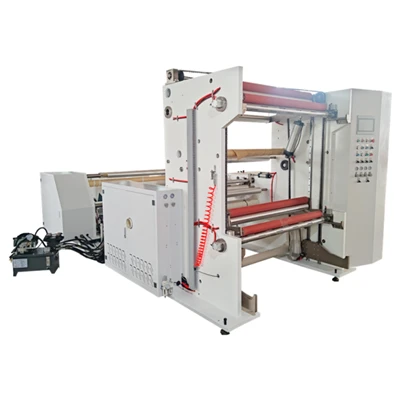
If you’re ready to stop wasting material, take on more jobs, and invest in a foil slitting machine that works for your specific needs, get in touch to chat through your requirements. No salesy pitch, just straight talk about what’ll work for you.
Foil Rewinding Machine References:
- “Foil Slitting Machines: Material Compatibility & Operational Considerations”, Industrial Machinery Association, 2022.
- “Metal Foil Processing for Electronics Applications”, Journal of Manufacturing Processes, Vol. 48, 2021.
- “Composite Foil Laminates: Properties & Slitting Best Practices”, Packaging Technology and Science, Vol. 34, 2020.
Wenzhou Sanhui Machinery Manufacturing Co., Ltd.
Wenzhou Sanhui Machinery Manufacturing Co., Ltd. is one of the most professional foil slitting machine manufacturers and suppliers in China. We have world-leading production equipment and strong manufacturing capabilities. Please feel free to wholesale advanced foil slitting machine made in China here from our factory. Customized orders are welcome.
Address: B17-8, Mechanical Industry Park, Wanquan Light Industry Production Base, Wanquan Town, Pingyang County, Wenzhou City, Zhejiang Province
E-mail: sanhui.slittingmachine@gmail.com
WebSite: https://www.sanhuislittingmachine.com/
