Let’s be real—if you’re in the business that relies on cutting steel bar stock, picking the wrong CNC steel bar shearing production line can turn your weekly rhythm of smooth shipments into a cycle of headaches. I’ve been in this game long enough to know what it’s like to waste time troubleshooting a machine that can’t keep up, or dropping cash on a line that’s way too fancy for what you actually need. As someone who supplies these lines, I talk to folks every single week who come to me with the same panic: “I just bought a line, and it’s breaking my budget, or it can’t handle the jobs I throw at it.” Let’s cut through the noise (pun absolutely intended) and break down exactly how to pick one that works for your business—no sales fluff, no overhyped features you’ll never use. CNC Steel Bar Shearing Production Line

First off, stop guessing your actual production needs. I see this all the time: a small fabrication shop that only does local concrete formwork decides to buy a line built for 24/7 highway bridge projects, just because the rep says it’s “top of the line.” That’s like buying a semi-truck to drive to the grocery store—pointless, and way more expensive than you need to be. Let’s get specific here. Pull your last 6 months of work orders, and count two numbers first: what’s the maximum length of steel bar you cut? And what’s the average thickness? If you’re mostly cutting 10mm rebar for residential foundation footings, a line that handles up to 50mm is overkill. But if you’re doing precast concrete for high-rise buildings, you can’t skimp on the thickness capacity. Also, how many parts do you cut in a day? A guy I talked to last month runs a shop that does 500 cuts a day, mostly the same 1.2m rebar for fence posts. A line that can switch between 10 different lengths in 2 minutes is cool, but he doesn’t need that—he just needs something that can crank out that 500 cuts without pausing every hour for a blade change. If you’re doing high-mix, low-volume custom jobs (like a metal fabricator that makes custom railings for homes), then flexibility is non-negotiable. But if you’re doing repetitive, large-batch work (like supplying rebar to local construction crews), speed and durability are your bread and butter. Don’t let anyone tell you a one-size-fits-all line works for everyone—it doesn’t.
Next, don’t sleep on the line’s core specs, but don’t fixate on useless numbers, either. Let’s start with the shear head—this is the heart of the whole operation, and it’s where most problems start. A lot of budget lines have single-blade shears that dull super fast, especially if you’re cutting deformed rebar (which has those ridges for concrete grip). I’ve seen a cheap line where the blades need replacement every 2 weeks for a guy running 1000 cuts a day. That’s downtime, that’s extra cost, that’s missed deadlines. Look for a line with a hardened steel shear head—some even have replaceable inserts, so you don’t have to swap the whole blade when it wears. Also, check how the line feeds the bars. Manual feeding works if you’re small, but if you’re doing 2000+ cuts a day, automatic feeding with a bar magazine is a game-changer. The last thing you want is a guy standing around all day loading 6m bars by hand. Wait, but also: how accurate is the length cutting? If you’re cutting rebar for a foundation, a 5mm error is annoying, but a 1mm error matters if you’re cutting parts that fit into a precast form. Most good lines have a length tolerance of ±0.5mm, but some budget lines will be off by 2mm or more, especially after a few months of heavy use. That’s a big deal—if every part is wrong, you’re wasting tons of steel, and no construction crew wants to pay for parts that don’t fit.
Then there’s the control system, and this is where a lot of business owners either get intimidated or get scammed by fancy features. Let’s be clear: you don’t need a control system that runs on Windows 11 and has a 10-inch touchscreen with built-in video calls if your only job is cutting standard rebar lengths for 8 hours a day. But if you’re doing custom jobs, the control system needs to be user-friendly. I’ve had guys come to me after buying a cheap line where the control is so convoluted that even their most experienced operator needs 2 hours to learn how to make a simple length change. Look for something that has simple programming: you can type in the length, the number of cuts, and go—no coding required. Some lines let you save common job setups, so if you do the same 1.2m cut 10 times a day, you don’t have to re-enter every time. Also, check if it has a built-in error alert. If a blade is getting too dull, or the line is misfeeding a bar, a good control will tell you right away, not just shut down out of the blue at 4pm on Friday when you have a big order due. That small feature saves so much headache. Don’t get tricked into paying extra for a control that has 3D design software—9 out of 10 small fabricators will never use that. Stick to what you need to run your jobs efficiently.
Now, durability and maintenance—these are the things that will kill you over the long term, not the upfront price. I once had a customer buy a line from a no-name supplier online for half the price of a decent one. A month later, his feed roller broke, and the supplier had no replacement parts for months. He was stuck waiting for 2 weeks, which cost him more in lost business than the difference between the cheap line and the good one. So first: check if the brand has a track record, and if they keep replacement parts in stock. A good supplier will have common parts (blades, rollers, sensors) ready to ship within 24 hours. Also, ask about how often the line needs maintenance. A high-quality line might only need a lubrication check every 2 weeks and a blade sharpening every 3 months. A cheap line might need lubrication every 3 days and blade changes every week. That adds up fast. Another thing: the frame of the line. If it’s a flimsy welded frame that vibrates when it runs, that’s when you get length errors. A solid, heavy-duty frame (usually made of thick steel plate) will hold its alignment even after years of heavy use. I can tell you from seeing hundreds of lines: the ones that vibrate a lot are the ones that have alignment issues within a year. So when you’re looking at a line, ask if you can see a video of it running at full speed, or even better, visit a shop that uses the same model. If the vibration is so bad you can feel it standing next to the machine, keep looking.
Budget is obviously a big factor, but don’t make it the only factor. I get it—small businesses have tight margins. But I’ve seen way too many guys cut corners here and end up spending way more later. Let’s break it down: total cost of ownership, not just upfront price. A line that costs $15k upfront might break down every month, need $500 in parts every time, and have high labor costs because it’s slow. A line that costs $25k upfront might only need $100 in parts every few months, run 20% faster, and have lower labor costs because it needs one less guy to run it. Let’s do a quick math example: if you run 1000 cuts a day, 5 days a week, that’s 200,000 cuts a year. A fast line might do that in 8 hours, while a slow one takes 10. That’s an extra 2 hours a day you’re paying an operator for. If your operator makes $25 an hour, that’s $50 a day, $250 a week, $13,000 a year extra. Oh, and if you miss a delivery because the slow line couldn’t keep up, that’s even more—late fees, lost clients, word of mouth that you can’t deliver. Now, that’s not to say you have to buy the most expensive line. There are solid mid-range lines that fit small to medium shops perfectly. The trick is to match the line’s specs to your needs, not the price tag. Also, watch out for hidden costs: some suppliers charge extra for installation, training, or even basic replacement parts. Ask for a full quote that includes installation, initial training, and a year of parts (if possible) so there are no surprises.
Another often-overlooked thing: after-sales support. This is make or break. A lot of suppliers will sell you a line and then disappear once the money is in their bank. I’ve had customers tell me horror stories where a random supplier took 2 weeks to answer a simple question about how to adjust the shear gap. If your line is down for 2 weeks, that’s lost revenue. So when you’re talking to a supplier, ask them how quickly they respond to service calls, if they have local technicians (or at least remote support that’s easy to access), and how long they’ve been in business. Someone who’s been supplying lines for 10 years is way more reliable than someone who popped up last year on Alibaba. Also, ask about training. If your operator doesn’t know how to use the line or fix minor issues, you’ll be calling for service every time a small problem comes up. A good supplier will send a technician to your shop to train your team for a few days, and even offer ongoing support after that. I always tell my customers: the line is only as good as the guy running it, so training is non-negotiable, not a “nice to have.”
Wait, what about special features you might not have considered? Let’s say you’re a shop that does rebar bending too—some lines integrate with rebar bending machines, which can cut down on your workflow. Or if you need to track parts for inventory, some lines have built-in counting software that logs how many of each part you cut, which saves you time on inventory checks. But again, only get these if you actually need them. If you’re a small shop that doesn’t track inventory that closely, don’t pay extra for that feature. On the flip side, if you do have specific needs, like cutting rust-resistant rebar or high-strength steel, make sure the line is rated for that. Some lines are only designed for standard carbon steel, and will struggle with stainless or high-tensile bar, leading to blade wear and inaccurate cuts.
Let’s wrap this up with a quick checklist you can reference, because I know you’re busy and don’t have time to re-read all this. First, do your homework on your own needs: max bar length, thickness, daily production volume, mix of jobs (high-volume repetitive or low-volume custom). That’s step one. Second, check core specs: hardened shear head, accurate length tolerance, feeding system that matches your volume. Third, don’t skip maintenance and support: replacement part availability, service response time, training. Fourth, total cost of ownership, not just upfront price. Fifth, only pay for features you actually will use.
At the end of the day, picking the right CNC steel bar shearing production line isn’t about chasing the biggest brand or the highest price tag. It’s about finding a line that fits your shop, your jobs, and your long-term goals. I’ve seen shops grow because they invested in a line that let them take on bigger jobs, and I’ve seen shops hit a wall because they bought the wrong one. If you’re still not sure, or you want to chat through your specific needs, I’m here to help. No pressure, no sales pitch that feels like a lecture—just real talk about what works for fabrication and construction shops like yours.
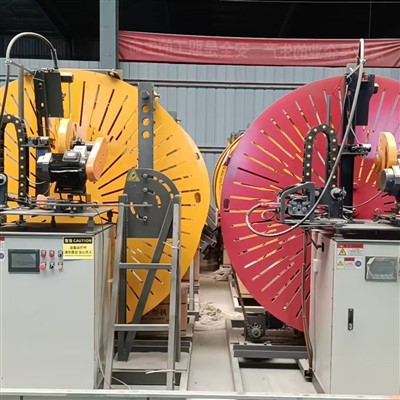
Don’t overcomplicate this. Take the time to figure out what you actually need, don’t fall for shiny features you’ll never use, and pick a supplier that stands behind their product. That’s how you avoid the headaches and get a line that makes your work easier, not harder.
CNC Steel Bar Shearing Production Line References:
- Metal Forming Magazine. (2022). “Key Considerations for CNC Shearing Line Selection for Fabrication Shops.”
- Construction Equipment Association. (2023). “Total Cost of Ownership for Steel Processing Equipment.”
- Fabricator Magazine. (2021). “Avoiding Common Pitfalls When Buying CNC Bar Shearing Lines.”
Xuhui (Shandong) Intelligent Equipment Co., Ltd.
Xuhui (Shandong) Intelligent Equipment Co., Ltd. is one of the most professional cnc steel bar shearing production line manufacturers and suppliers in China. Please feel free to wholesale high quality machines made in China here and get quotation from our factory. Contact us for customized service.
Address: Industrial Park, Hetaoyuan Town, Juye County, Heze City, Shandong Province, China.
E-mail: yue@xuhuijx.com
WebSite: https://www.xuhuiintelligent.com/
