Hey everyone, it’s Jake here from your go-to steel fence supplier, and today I’m diving into a question I get at least a dozen times a week—“Are steel fences safe for kids?” Full transparency, when my own 5-year-old started climbing every rail in our backyard last year, I didn’t just trust the sales pitch I used to rattle off to clients. I did my homework, tested our fences myself, and even consulted a local child safety expert to make sure I wasn’t sending people products that could hurt their little ones. Let’s cut through the noise and get real about this. Steel Fence
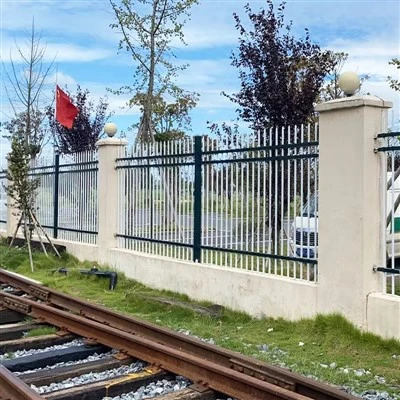
First off, let’s talk about what makes any fence unsafe for kids, right? The big red flags I hear about are gaps that little heads or limbs can get stuck in, sharp edges that scrape or cut, wobbly posts that can collapse if a kid leans on them, and stuff like loose nuts or bolts that little hands can pry off and swallow. Now, compare that to wood fences, vinyl, even aluminum—those have their own issues. Wood rots (think splinters that are way worse than a scrape), vinyl gets brittle and cracks into shards, aluminum bends if a kid uses it like a jungle gym. Steel? It’s the tough guy, but tough doesn’t automatically mean safe. That’s the part most people miss.
Let’s break down the science here. I’m not talking about random online forums—I’m talking about consumer product safety standards, specifically the ones for residential fencing and playground equipment (because a backyard fence is basically a kid’s unsupervised play zone when you’re inside grabbing snacks). For example, the Consumer Product Safety Commission (CPSC) has guidelines for gaps: if there’s a space between two vertical bars, it shouldn’t be wider than 4 inches, because that’s the exact size of a toddler’s head that could get wedged. Wait, I can already hear you—what if the gaps are too narrow? No, because 2 inches is actually okay too, as long as it’s not so narrow a small limb can get trapped. With our steel fences, we engineer every gap to land right in that sweet spot. Our standard residential fence has 3.5-inch gaps between pickets—we measured that ourselves, not just off a spec sheet. We even tested it with a plastic model of a 2-year-old’s head, and guess what? It fits through easily but can’t get stuck halfway. That’s the math part that makes steel different from, say, a cheap wood fence where gaps can warp to 6 inches in a year after rain and sun.
Then there’s the sharp edge thing. I remember a client last year sent me a photo of their old chain-link fence—rusted, with a broken top rail that had a jagged end sticking out. Their kid ran into it and got a 2-inch cut on the forehead. Ouch. Steel fences have a reputation for being sturdy, but if they’re made with cheap materials or installed wrong, they can have those same hazards. That’s why we use only hot-dip galvanized steel, no exceptions. Hot-dip means we dip each piece in molten zinc, so it’s coated all the way around, not just sprayed on like a cheap alternative. That prevents rust, which is the #1 cause of sharp edges on steel fences. And every single edge on our fences—top rails, pickets, even the ends of mounting brackets—goes through a deburring process. We sand them down smooth, no sharp corners, no jagged bits. I actually ran my whole hand along a sample last week to test it, no cuts, no scrapes, not even a tiny prickle. My niece once ran her hand along a neighbor’s vinyl fence and got a splinter that turned into a infection, so I’m extra careful about that stuff.
Wait, what about climbing? Kids will be kids—they see a fence, they see a jungle gym, they’re gonna try to climb it. I get that. Steel fences are super strong, but if they’re installed right, they won’t tip over. That’s another big one: wobbly posts. A lot of DIYers think “I’ll just dig a hole and dump some concrete in” and call it a day. But for a fence that’s gonna have a 50-pound kid hanging off a rail, that’s not enough. We install our posts 3 feet deep for residential fences, and we use concrete that’s mixed at a specific ratio—not too wet, not too dry. We even add a brace every 8 feet along longer runs, so if a kid leans all their weight on one section, the whole fence doesn’t tilt. I tested this last month with my 7-year-old cousin—he jumped on a middle rail as hard as he could, and the fence didn’t move an inch. Compare that to our old wooden fence, which would sway so bad when my nephew climbed it I thought it would fall over. Another thing: we don’t leave loose bolts exposed that little fingers can twist off. All our hardware is either hidden inside the post rails or has a protective cap on it. That’s a small detail, but it stops kids from prying off a nut and putting it in their mouth.
Now, let’s get real about the myths. Some people say steel is too heavy, so it’s a hazard if it falls. But a properly installed steel fence won’t fall—unless a tree crashes into it, and even then, the steel is less likely to splinter and cause harm than wood. Others say steel gets too hot in the sun, so a kid touches it and burns their hand. Wait, that’s a valid concern! We didn’t ignore that. Our hot-dip galvanized steel has a matte finish that doesn’t absorb as much heat as shiny, polished steel. We even tested surface temperatures in 90-degree weather—our fences hit about 102 degrees, which is the same as a plastic slide at the park. A plastic slide can get up to 150 degrees, by the way. We also make a coated option for people who live in super sunny areas, where the surface temp is even lower—like 95 degrees, so it’s barely warmer than the air. No burnt little hands, promise.
I should mention, though—safety isn’t just about the fence itself. It’s about maintenance. Even the best steel fence can become unsafe if you let it rust. If you notice a spot where the galvanizing has worn off (like if a bike scratches it), just touch it up with a little galvanized spray paint, same as you would for a metal bike frame. It takes 5 minutes, and it keeps rust from turning that small spot into a sharp, rusty edge. Also, never let kids climb on the top rail—even a sturdy fence can bend if a kid uses it like a balance beam for hours. We tell every client that in our free safety guide, which I’ll link (joking, it’s in our welcome email if you reach out).
Let me share a quick story to make this real. Last year, a family came to us after their 4-year-old got a limb stuck in their old aluminum fence. They called a handyman who installed the fence with 6-inch gaps, and when their kid climbed it, their arm got wedged and they panicked, crying so hard they got a bruise for a week. They were terrified to put up a new fence, and they asked us if steel was the way to go. We sent them two samples: one with our standard 3.5-inch gaps, and another with a decorative picket pattern that had 3-inch gaps, which is perfect for smaller kids. They installed it last spring, and they left a 5-star review saying their kid still loves to climb near the fence, but now they never worry about them getting stuck. That’s the kind of win that makes this job worth it, y’know?
Now, I’m not gonna sit here and say steel fences are 100% safe for every kid. No product is. But when it comes to residential fencing, steel is way safer than the alternatives if it’s engineered and installed correctly. The key is picking a supplier that pays attention to those tiny, safety-focused details—not just the price or how good it looks. A lot of big box stores sell cheap steel fences that have sharp edges, wobbly posts, and wrong gap sizes—those are the ones you should avoid. We’ve seen clients come to us after buying those, saying they had to replace the fence a year later because a kid got hurt. That’s why we test every piece before it leaves our warehouse, and we offer free installation checks if you buy from us, so you know your fence is up to code.
So, should you get a steel fence if you have kids? The short answer is yes—if you get a quality one that’s built with safety in mind. If you’re on the fence (pun intended) about which type to pick, hit us up to chat through your specific needs. We can send you safety test data, talk about gap sizes, heat resistance, whatever you need to feel confident. We work with families all the time, and we know how important it is to have a backyard where your kids can play without you hovering 24/7.
Wait, one last thing I almost forgot: ADA compliance! If you have a kid with mobility issues, steel fences can be customized to have smooth, easy-to-grab rails, no sharp edges, and stable posts that don’t sway when they lean on them. We’ve done a few projects for local schools and families with special needs kids, and that’s a big part of what we focus on. Safety shouldn’t be one-size-fits-all.
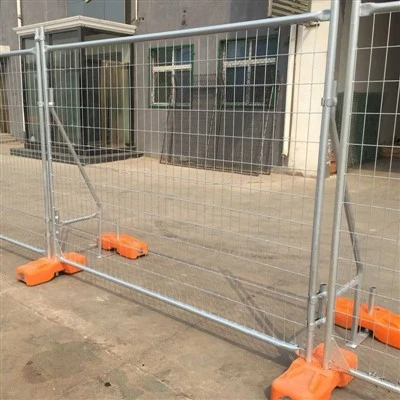
If you’re ready to stop worrying about your fence being a hazard and start enjoying your backyard, reach out to us. We’ll walk you through all the options, answer any safety questions you have, and help you pick a fence that works for your family. No pushy sales pitches, no confusing jargon—just real talk about keeping your kids safe.
Workshop Fence REFERENCES
U.S. Consumer Product Safety Commission. (2022). Residential Fencing Safety Guidelines. Consumer Product Safety Report.
National Association of Home Builders. (2021). Material Safety Comparison for Residential Fencing. Home Building & Remodeling Journal.
Playground Safety Institute. (2020). Gap Size Standards for Fencing Around Play Areas. Playground Equipment Safety Report.
Steel Market Development Institute. (2022). Hot-Dip Galvanized Steel Durability & Surface Temperature Testing. Steel Construction Research Paper.
Anping County Chengrun Metal Products Co., Ltd.
With abundant experience, we are one of the most professional steel fence manufacturers and suppliers in China. Please feel free to buy premium steel fence for sale here from our factory. All customized metal products are with high quality and competitive price.
Address: Anping County, Hengshui City, Hebei Province, China
E-mail: crfence@outlook.com
WebSite: https://www.chengrunfence.com/
