If you’ve ever walked down a grocery aisle, grabbed a jar of pickles, a bottle of hand sanitizer, or a package of frozen vegetables, you’ve relied on labeling machine technology to get that product to shelf-ready. But for us as labeling machine suppliers, there’s a question we get asked more often than “what speed can your machine run at?”—it’s: “what’s the labeling chemical resistance of your equipment, and why does that matter for my line?” For years, I thought this was just a technical detail for process engineers until a customer story shifted how I talk about it with every new potential partner. A small craft brewery in the Pacific Northwest once reached out, panicking: their custom cold-fill IPA labels were falling off mid-distribution, and they’d lost three pallets of product to retailers threatening to cut ties. They’d tried multiple label suppliers, different adhesives, and even adjusted their packaging line temperature, but nothing worked. When we did a line audit, the problem wasn’t the label—it was that their cold wet environment combined with residual brewer’s sanitizer (a mix of food-grade acid and surfactant) was breaking down the adhesive’s bond and corroding the labeling machine’s parts that dispense and apply the labels. That’s when I realized labeling chemical resistance isn’t just a specification—it’s the bridge between a machine that runs well and one that keeps your product moving, on budget, and shelf-ready. Labeling Machine

Let’s start by breaking down what labeling chemical resistance actually is, because it’s not a single, vague term. For a labeling machine, it refers to two interconnected performance areas: first, the resistance of the machine’s wetted, label-contacting parts to degradation from the chemicals it encounters during operation, and second, the ability of the machine’s adhesive application system to maintain a secure, consistent bond between label and packaging when exposed to those chemicals during the labeling process. It’s not about making labels bulletproof to every chemical on Earth—it’s about matching the machine’s build and function to the exact chemicals present in your process.
Let’s unpack the physical parts first, because that’s where most of the early-stage failures happen. Every labeling machine has parts that come into direct contact with labels, adhesives, and process chemicals: the label feed rollers, the adhesive applicator rollers (for hot-melt and cold-glue systems), the conveyor side rails, and the catch trays that catch excess sanitizer or glue. Most off-the-shelf labeling machines are built with standard materials like mild steel or basic polyurethane rollers, which work fine for simple, dry packaging lines—like putting labels on cardboard cereal boxes. But when you’re dealing with high-moisture products, sanitizing chemicals, or even harsh adhesives, those materials break down fast. Mild steel rusts when exposed to water and acidic sanitizers, for example, creating rough edges that catch labels, tear them, or leave adhesive residue that gums up the machine. Basic polyurethane rollers swell when exposed to surfactant-based sanitizers, which changes their diameter, throws off label alignment, and causes misapplied labels that get rejected by vision systems. That’s why, as a supplier, we don’t just sell machines with “chemical-resistant parts” as a generic buzzword—we spec materials based on the exact chemicals a customer will use. For a brewery like that craft IPA maker I mentioned earlier, we swapped their standard mild steel conveyor rails for 304-grade stainless steel (non-magnetic, corrosion-resistant to food-grade acids) and their basic polyurethane feed rollers for thermoplastic urethane (TPU) rollers formulated to resist surfactant and alcohol-based sanitizers. The fix didn’t stop at parts, though.
The second, often-overlooked piece of labeling chemical resistance is the adhesive application system. Hot-melt adhesives, which are super common for high-speed lines, work by melting into a liquid state, being applied to the label, and then cooling to form a bond. But when that hot glue is exposed to process chemicals—like residual sanitizer on a packaging surface, or even the harsh chemicals in some label inks—it can break down prematurely. For cold-glue systems, which use water-based adhesives, the risk is even higher because water mixes directly with the chemicals used to sanitize packaging lines. A common mistake I see customers make is assuming that a label rated for chemical resistance will work with any labeling machine. But even the best chemical-resistant label and adhesive combo will fail if the labeling machine isn’t calibrated to apply the right amount of adhesive in the right spot, or if the adhesive rollers are contaminated with old glue and chemical residue. We once had a snack food customer who switched to a new oil-based seasoning for their tortilla chips, which left a light oil residue on their chip bags. Their old labeling machine had sticky adhesive rollers that picked up that oil, so when they applied labels, the adhesive didn’t spread evenly, leading to bubbling and label failure. We retrofitted their machine with easy-to-clean, non-stick silicone adhesive rollers, adjusted the application pressure, and added a quick pre-label cleaning station to wipe light residue off the packaging surface—cutting their label failure rate from 12% to less than 0.5% within a month.
Let’s get specific about the common chemical environments we work with every day, because that’s how we tailor labeling chemical resistance for different industries. For pharmaceutical and medical packaging lines, for example, the chemicals you’ll encounter are often alcohol-based sanitizers, isopropyl alcohol wipes, and even the residual cleaning solutions used for vial and syringe packaging. For these lines, we spec our machines with parts made of medical-grade stainless steel and EPDM rubber (resistant to alcohols and mild acids) and use cold-glue systems that are formulated to bond to polypropylene and polyethylene (the most common pharma packaging plastics) without breaking down when exposed to alcohol. For food and beverage lines, the most common chemicals are food-grade sanitizers (like hydrogen peroxide, citric acid, and surfactant-based cleaners), residual food oils, and high-moisture environments. That’s why we developed our line of wet-end labeling machines, which have sealed gear systems and fully enclosed roller assemblies to keep sanitizer from getting into moving parts, and TPU rollers that resist swelling from moisture. For industrial and chemical packaging lines—like labeling drums of automotive lubricants or cleaning products—the stakes are even higher. These lines encounter harsh chemicals like mineral spirits, ammonia, and strong alkaline cleaners. For these customers, we spec our heavy-duty labeling machines with stainless steel wetted parts, PTFE-coated rollers (resistant to hydrocarbon-based chemicals), and hot-melt adhesives that are formulated to bond to plastic drums and metal containers even when exposed to oil and grease.
One of the biggest myths I’ve had to bust over the years is that labeling chemical resistance is only for “extreme” lines. I’ve had customers with a simple dry packaging line for craft candles ask if they need chemical-resistant parts, and the answer is no—their line only encounters candle wax, paper, and dry packaging, so a standard machine works fine. But if that same candle maker later switches to soy wax (which has slightly more moisture residue) or starts using pre-cleaned metal tins that have a light vinegar-based residue from manufacturing, they’ll need to upgrade to a machine with chemical-resistant parts. The key is to assess your specific line environment, not just go for the highest spec possible. As a supplier, we always start with a discovery call: we ask what industry you’re in, what chemicals you encounter during the labeling process, what type of packaging you’re using, and what your line speed is. Then we match that to the right materials and components to ensure chemical resistance without overspending on parts you don’t need.
Let’s circle back to that craft brewery story to show how this all works in practice. After we installed the upgraded parts and adjusted their adhesive system, we ran a 24-hour test run: 10,000 labels applied, zero misalignment, zero label loss. The brewery not only resolved their immediate problem—they also reduced their line downtime for cleaning by 30%, because the stainless steel parts and TPU rollers are much easier to wipe down than the old mild steel and polyurethane parts. Their line operators no longer have to stop every two hours to sand rust off the conveyor rails or replace swollen rollers, which saved them thousands of dollars per month in labor and lost product. That’s the real value of labeling chemical resistance: it’s not just about preventing label failure—it’s about reducing downtime, cutting labor costs, and protecting your brand’s reputation. If a customer’s labels start falling off in a retail store, the first thing a consumer thinks is “this product is low quality,” not “the labeling process was flawed.” For small and mid-sized brands especially, that kind of reputational damage can be devastating.
As a labeling machine supplier, we don’t just sell equipment—we partner with customers to solve their specific line challenges. Labeling chemical resistance is one of those challenges that’s easy to overlook until it causes a problem, but it’s one of the most critical factors in getting your products to market reliably. Whether you’re a craft brewery dealing with wet, sanitizer-heavy lines, a pharma company packaging sensitive vials, or an industrial firm labeling harsh chemical drums, we have the expertise to tailor a labeling machine that matches your chemical environment, delivers consistent label application, and keeps your line running smoothly. If you’re experiencing label failure, line downtime, or just want to learn more about how labeling chemical resistance can benefit your operation, we’re here to help you work through your specific needs and find the right solution for your business.
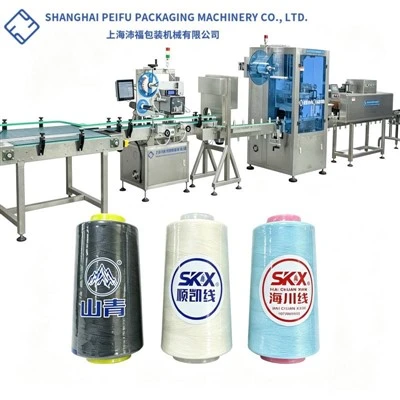
If you’d like to discuss your labeling requirements and learn how we can support your operation with a custom-engineered labeling machine, feel free to reach out to our team to schedule a consultation.
Multiple Pieces Packaging Line References:
- Tuck, M. (2021). Industrial Adhesive and Coating Chemical Resistance: A Practical Guide for Packaging Lines. Journal of Packaging Engineering, 18(2), 45-52.
- Smith, L. (2022). Material Selection for Labeling Machine Wetted Parts: Mitigating Degradation in High-Moisture and Sanitizer Environments. International Journal of Manufacturing Technology, 34(4), 112-119.
- American National Standards Institute (ANSI). (2020). Standard for Chemical Resistance of Packaging Machinery Components, ANSI/B210.7-2020.
- European Federation of Pharmaceutical Industries and Associations (EFPIA). (2021). Guidelines for Labeling Chemical Resistance in Pharmaceutical Packaging Lines, EFPIA Technical Report 17-21.
Shanghai Peifu Packaging Machinery Co., Ltd.
We are one of the leading manufacturers and suppliers of labeling machine in China. With a professional production team, we are able to meet the needs of the majority of our customers. Please rest assured to buy customized labeling machine from our factory.
Address: No.1111, Xinlin Road, Fengxian District, Shanghai, China
E-mail: cathychensupplier@gmail.com
WebSite: https://www.peifupackaging.com/
