If you’ve ever shipped goods for Amazon FBA via ocean freight, you know customs clearance isn’t just a box to check—it’s the make-or-break step that turns a long, cross-Pacific voyage into inventory on a warehouse shelf. As a US FBA ocean freight supplier, I’ve walked hundreds of clients through this process, from small ecommerce founders shipping 5 pallets of handmade candles to medium-sized retailers moving 40-foot containers of outdoor gear. Most of them land in my inbox at 2 a.m. panicking, having received a “delay in customs” alert from their carrier, wondering if their goods will get stuck indefinitely or hit with hidden fees that eat into their FBA profits. The truth is, customs clearance for US FBA ocean freight isn’t a random, arbitrary process. It’s a structured, rule-bound workflow that, when you understand each step, eliminates most surprises and keeps your cargo moving on schedule. Let’s break it down, step by step, from the moment your cargo leaves your overseas factory to the second it clears US customs and heads to your FBA warehouse. US FBA Ocean Freight
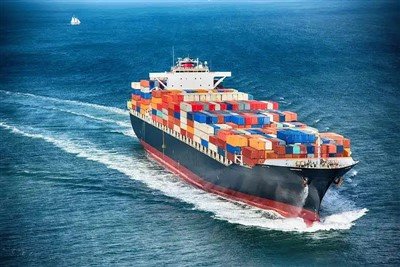
First, let’s set a quick baseline: I specialize in LCL (less than container load) and FCL (full container load) ocean freight for FBA, and every client I work with starts the clearance process before their ship even leaves the origin port in China, Vietnam, or anywhere else. The biggest mistake new FBA shippers make is waiting until the ship is already at sea to start prepping customs documents. By then, you’ve already burned half the time you have to meet Amazon’s warehouse pickup cutoffs—miss that, and your cargo might sit in a port for weeks, forcing you to pay Amazon’s long-term storage fees or even lose a sales window for a hot product.
Let’s start with pre-departure preparation, the phase that sets the entire clearance in motion. The first non-negotiable here is working with a US-licensed customs broker. I can’t stress this enough: never try to clear FBA ocean freight yourself, even if you’ve shipped personal items before. US customs has thousands of rules specific to commercial goods, plus FBA has unique requirements (like pallet labels and box size rules) that a standard broker might not know. A broker licensed by US Customs and Border Protection (CBP) knows how to map FBA’s warehousing codes to your customs entry, which avoids delays before your cargo even touches US soil. That said, your broker only has as much good information as you give them. Before your cargo leaves the origin factory, you need to gather a stack of documents that act as the foundation of your clearance. The core ones are your commercial invoice, packing list, and Bill of Lading (B/L).
Wait, let’s talk about the B/L for FBA specifically, because this is where most new shippers mess up. The B/L is the legal document that proves you own the cargo and that the carrier is obligated to deliver it to the correct place. For standard ocean freight, the B/L might be consigned to your US address, but for FBA, you need a “straight B/L” consigned to both your customs broker and the FBA warehouse, or sometimes to CBP’s electronic system for FBA entries. If you get this wrong, your cargo could be held at the port because the B/L doesn’t specify that it’s for Amazon’s warehouse, not a residential or commercial address. I once had a client who sent a B/L consigned to their personal LLC, and by the time we caught the mistake, the ship was 3 days out of Shanghai—we had to airwaybill a corrected copy, which cost them $1,200 in rush fees, all because they skipped confirming the B/L details early.
Next up, when your ship arrives at the US port (say, Los Angeles or Long Beach, the two largest FBA ocean ports), that’s when the CBP’s automatic screening kicks off. This is called the Automated Targeting System (ATS), and it’s not random—ATS uses a huge set of data points to flag cargo for inspection, from the value of your goods to the country of origin, even the number of pallets. For example, if you’re shipping textile goods from a country with a history of anti-dumping duties, ATS might flag it for a physical inspection to verify the fabric content. If you’re shipping a product that has a past tariff error, that’ll also trigger a flag. The good news is, for FBA cargo, most shipments pass through ATS without a second glance—CBP knows that FBA uses standard, high-volume shipments, so they’re less likely to flag a routine LCL pallet of kitchenware. But if you’ve undervalued your goods on the commercial invoice (a common tactic new shippers use to lower customs fees), ATS will flag that immediately, leading to a delay while CBP verifies the actual value. That’s another mistake I see all the time: undervaluing to save a few bucks upfront, getting hit with a penalty fee, and waiting an extra week for clearance.
Once your cargo passes ATS, the next step is filing your customs entry, which is handled exclusively by your licensed broker. The entry is a digital form submitted to CBP’s Automated Commercial Environment (ACE) system—this is the backbone of all US customs processing, and if your broker doesn’t know how to navigate ACE for FBA specifically, your entry will get stuck in a queue for days, even weeks. For FBA, the entry code is key: you need to use the FBA-specific entry code (usually 9902) which tells CBP and the port that this cargo is destined for an Amazon fulfillment center, not a retail store or warehouse. Using the wrong entry code is a huge red flag for CBP, and it’s one of the first things I check when a new client’s shipment is running behind. For example, a few months back, a client of mine used the standard entry code 1001 for general commercial goods, and their entry was delayed for 8 days because CBP thought the cargo was for a store, not a pre-approved FBA warehouse. Switching to the FBA entry code fixed that immediately, but it cost them 8 days of inventory sitting at the port.
Now, let’s talk about inspections, because this is the part that no one wants to deal with, but it’s a normal part of the process, not a disaster. Inspections can be either documentary (meaning CBP just checks your paperwork to make sure it’s all in order) or physical (meaning they open your pallets to check the goods themselves). Documentary inspections are way more common for FBA, because most entries are routine, but physical inspections do happen, usually for high-value goods, goods with ambiguous country of origin, or products that require special certifications (like electronics, which need FCC certification, or food, which needs FDA approval). If your cargo is selected for physical inspection, your broker will coordinate with the port’s inspection team, and you’ll have to pay inspection fees, which usually run between $150 and $500, depending on the size of your shipment. The worst part of a physical inspection? If your pallets aren’t labeled correctly per Amazon’s rules—like missing the FNSKU or Amazon warehouse code—CBP might not even process the inspection, which adds more delay. I always remind my clients to double-check their pallet labels before the cargo leaves the origin factory; it takes 10 minutes, and it saves you a week of waiting at the port.
Once you’ve passed ATS, filed your FBA entry, and any inspections are done, the next step is paying duties and taxes. This is straightforward, but again, FBA has a unique angle here: duties are calculated based on the harmonized tariff schedule (HTS) code for your product, and you need to make sure you’re using the correct HTS code. For example, a silicone kitchen spatula has a different HTS code and duty rate than a metal spatula, and using the wrong one can lead to overpaying by hundreds of dollars, or underpaying and getting hit with a penalty. Your broker will calculate the duties and taxes for you, and you can pay them online via ACE, which is fast—usually same-day if you pay electronically. If you don’t pay within a set timeframe (usually 5 business days), CBP will put your cargo in general order, which means you have to pay a storage fee every day it sits at the port, and eventually, if you don’t pick it up, CBP can auction it off. I’ve had a few clients who forgot to pay duties because they were busy with Amazon listing updates, and their $5,000 shipment ended up costing them $800 in storage fees before they realized it. That’s why I send payment reminders 3 days before the deadline—small step, big peace of mind.
Now, here’s the part that makes FBA customs clearance different from any other commercial clearance: the delivery authorization to Amazon. Once CBP clears your cargo, you don’t just get to go pick it up from the port. You have to get a delivery order from the ocean carrier, which then lets you book a slot at the Amazon FBA warehouse. Wait, slot booking is another thing that trips people up. Amazon’s warehouse slots are extremely competitive, especially for high-demand ports like Los Angeles and Newark. If you don’t book a slot in advance, your cleared cargo will sit at the port or a third-party freight forwarder’s yard for days, adding storage fees and delaying your inventory restock. As an FBA ocean freight supplier, I handle slot booking for all my clients, because I know the Amazon warehouse schedules and can book slots 2-3 weeks in advance, way before the cargo even arrives at the port. That’s a service that makes all the difference: I once had a client whose shipment cleared customs in 2 days, but he tried to book a slot himself and was told the next available slot was 12 days later. I got him a slot in 48 hours, and he avoided $1,200 in port storage fees.
Let me walk you through a real example of how this works, because seeing a case study makes it all concrete. Back in March, a client came to me with an LCL shipment of 6 pallets of portable Bluetooth speakers, destined for Amazon’s warehouse in Phoenix. He tried to handle clearance on his own, and within a week, his shipment was stuck at the Los Angeles port. When he reached out to me, I first asked to see his entry documents: he’d used the wrong HTS code for Bluetooth speakers, and his B/L wasn’t consigned to the FBA warehouse. We corrected both within 24 hours, filed the FBA-specific entry, and his cargo passed ATS without inspection. We paid the duties (which he’d underpaid by $210, so we settled that without a penalty), and then I booked a priority slot at the Phoenix warehouse, which got his cargo delivered to Amazon 5 days earlier than he’d been told he’d get it. Total delay from the original hold: 3 days, instead of the 12 he’d been facing. That’s the kind of result that comes from knowing every step of the FBA ocean freight clearance process inside and out.
Now, let’s talk about common pitfalls that I see new FBA shippers fall into, because avoiding these will save you time and money. First, not verifying all documents before the cargo leaves the origin port. I always tell clients to send me a copy of their commercial invoice, packing list, B/L, and product certifications at least 3 days before the ship departs—if there’s a mistake, we can fix it before the ship sails, which is way easier and cheaper than correcting it mid-voyage. Second, not working with a US-based customs broker that specializes in FBA. A lot of overseas freight forwarders will claim they handle US customs, but they’re not licensed in the US, so they have to outsource to a broker, which adds a middleman and potential errors. Third, ignoring Amazon’s label requirements. As I said earlier, wrong labels can lead to inspection delays, or even Amazon rejecting the cargo entirely, which means you have to send it back at your own cost. Fourth, not planning for port delays. Ocean freight from Asia to the US takes 14-21 days, and port congestion (especially at LA/Long Beach) can add another 3-7 days. So when you’re calculating your timeline for clearance, add at least 5 extra days for contingencies—don’t plan on clearing customs in 2 days if you have a strict Amazon deadline.
Wait, one more thing: what about special products? If you’re shipping goods that require additional certifications, like electronics (FCC), food (FDA), cosmetics (FDA), or textiles (fiber content labels), you need to get those certifications ready before the cargo leaves the origin port. CBP will reject your entry if you don’t have the required certificates, and that’s a non-negotiable delay. For example, a client once tried to ship 2 pallets of organic snacks without a FDA Food Facility Registration number, which is required for all food shipped to the US. We had to rush the registration, which took 3 days, and his cargo was delayed by a week. Again, this is something that can be avoided by planning ahead.

At the end of the day, customs clearance for US FBA ocean freight isn’t complicated—it’s just detailed. It requires attention to small, specific details that don’t matter for regular commercial shipments, but make all the difference for Amazon FBA, where inventory timelines directly impact sales and fees. As a US FBA ocean freight supplier, my job isn’t just to move your cargo on a ship—it’s to make sure that cargo clears customs smoothly, gets to Amazon on time, and doesn’t leave you with surprise fees or delays. If you’re planning your next FBA ocean freight shipment, don’t try to navigate the clearance process alone. Partner with someone who knows the ins and outs of CBP rules, Amazon’s requirements, and the port workflows to keep your business moving. Reach out to discuss your specific needs, and we can build a plan that fits your timeline and budget, no guesswork, no hidden fees, just reliable service that gets your inventory to where it needs to be.
References
US FBA Air Freight US Customs and Border Protection. (2024). Customs Clearance Procedures for Commercial Imports. CBP.gov.
Amazon Seller Central. (2024). FBA Ocean Freight Shipping Requirements. Amazon Seller Services.
World Tariff Organization. (2024). Harmonized Tariff Schedule for US Imports. WTO.org.
Federal Communications Commission. (2024). Import Certification Requirements for Electronic Products. FCC.gov.
Tuoyuan International Logistics Co., Ltd.
As a professional China-USA logistics provider, we offer US FBA ocean freight service for FBA and commercial shipments. If you’re going to know more about customized US FBA ocean freight service, welcome to contact us for the pricelist. Good service and reasonable price are available.
Address: 1st Floor, Building 5, No.37, Jingshan Road, Beiyuan Street, Yiwu City, Jinhua City, Zhejiang Province, China
E-mail: info@topyounglog.com
WebSite: https://www.top-younglog.com/
