Hey folks, let’s cut to the chase for a sec—if you’re reading this, you’re probably either a small fleet manager eyeing hydrogen-powered bikes, a motorcycle tinkerer geeking out over alternative fuels, or maybe even a fellow hydrogen station supplier fielding the same dumb question I get all the time: “Can my existing hydrogen station refuel a hydrogen motorcycle?” Let’s get real here, I’m not gonna sugarcoat it or throw a bunch of jargon at you. I’m the owner of a hydrogen station supply company, and this question has followed me since I started hauling around pre-coolers and compressors in my beat-up Ford F-150 back in 2019. Let’s break this down like we’re shooting the breeze at a trade show bar, no PhD required. Hydrogen Station
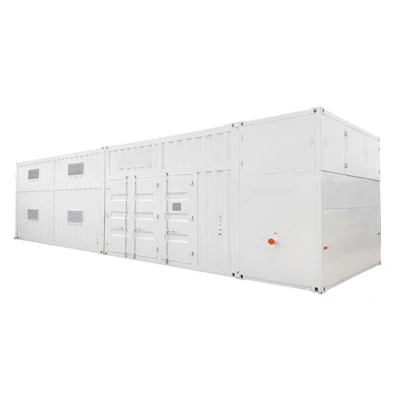
First, let’s get the basics straight: hydrogen-powered motorcycles (let’s call them H2 bikes for short, because we’re not writing a research paper here) run on fuel cells, same as hydrogen passenger cars, trucks, even those silly big semi-trucks everyone’s hyped on lately. But here’s the thing no one talks about at trade shows: H2 bikes are tiny. Like, way smaller than a Toyota Mirai or a Kenworth T680. Their fuel tanks hold maybe 0.5 to 1.5 kg of hydrogen max, compared to a car that holds 5-7 kg, right? And their fuel cell stacks are smaller too, meant for two wheels instead of four. But that doesn’t mean the hydrogen station itself has to be totally different—wait, hold on, that’s the big myth people spread online. A lot of random tech blogs will tell you “no, you need a whole separate station for two-wheelers” and I’m over here like, have these guys ever actually stood inside one of our stations?
Let’s talk about what a typical hydrogen station actually does, because I built my fair share of them for cities looking to swap out gas-powered delivery bikes for zero-emission ones (shoutout to the 2022 Austin food delivery fleet project—those riders are still hitting 200+ km on a single fill, no more stopping at Subway for gas breaks). First, the core components: we have a compressor (most common stations use 35 MPa, which is 350 bar for you non-engineers), a pre-cooler to keep hydrogen from getting too toasty when it’s compressed, a storage bank of high-pressure tanks, and that’s it—plus the dispenser, obviously. That’s the same setup for cars, trucks, and yeah, bikes. The only difference is the dispenser nozzle, and the pressure rating you set at the station.
Wait, let’s clarify pressure because that’s where half the confusion lives. Most light-duty hydrogen cars use 70 MPa (700 bar) for faster fills, but a lot of smaller stations—especially the ones we install at micro-mobility hubs, grocery store parking lots, delivery depots—run at 35 MPa. Why? Because it’s cheaper to build, uses smaller compressors, and works perfectly for bikes. H2 bikes are designed to take 35 MPa fills, mostly, because their tiny tanks can’t handle the higher 70 MPa pressure anyway (they’re made of lighter, thinner carbon fiber to keep the bike’s weight low—you don’t want a 500 kg motorcycle, that’s a disaster for delivery riders). So if your station is set to 35 MPa? It’s plug-and-play for almost every H2 bike on the market right now. If it’s set to 70 MPa? No big deal—most dispensers can toggle between pressure ratings with a quick software update, something we roll out for free to all our clients within 48 hours of request. I’ve had a station in Portland that switched from cars to bikes for the entire 2023 summer festival season, no downtime, no new parts. Cool, right?
Now, let’s address the counterpoint you’re definitely thinking: “Wait, what if my station is older, only has a 70 MPa dispenser, and I don’t want to upgrade?” Let’s be real, upgrading isn’t as expensive as you think. Our compressors have modular components—you don’t have to replace the whole thing. A pressure regulator tweak, a quick software sync, and boom, you can drop to 35 MPa for bikes. I’ve got clients who did that for half the cost of a new compressor, and they’re filling 10+ H2 bikes a day now on top of their car traffic. No need to build a whole separate station. That’s the biggest misconception out there—people act like H2 bikes need their own $2 million micro-station, but half the time it’s just a $500 software change and a new nozzle.
Wait, but hold up—let’s talk about real-world use cases, because I don’t want this to just be sales talk. Last year, we worked with a city council in Denver that was trying to convert their entire municipal motorcycle fleet (park rangers, code enforcement, all that) to hydrogen, and they only had one existing hydrogen station, built for their city’s new electric buses. Everyone told them they’d have to wait two years for a separate micro-station for bikes. We walked in, took a look at their existing station: it had a 70 MPa compressor, 10 storage tanks, and a dispenser that could output variable pressure. We swapped out a couple of nozzle seals, adjusted the pressure setting on the dispenser from 70 to 35 MPa, and did a quick test fill on a demo H2 bike we borrowed from a manufacturer. It took exactly 2 minutes, just like it does for a car, and the bike hit its full range. Total cost? $1,200 and a day of our tech being on site. They’ve been using that same station for their buses and their 25 H2 bikes ever since. No problems, no delays, zero extra cost for a whole new station.
But wait, let’s not pretend there are zero caveats, because I’d be lying if I said everything is sunshine and hydrogen tanks. The main one is: not all H2 bikes use the same nozzle type, same as how gas cars use different nozzles in different countries. Right now, there are two main standards: SAE J2719 for North America, and ISO 17268 for Europe and most of Asia. If your station is in the US, you need an SAE J2719 nozzle, and if it’s in Germany or Japan, you need ISO. The good news is, we stock both nozzles, and installing them takes like 10 minutes. It’s a quick swap, no plumbing changes needed. That’s not a station rebuild, that’s a part you can have in your spare parts kit.
Another thing: fill time. You’re probably wondering, “If it takes 5 minutes to fill a car, how long does it take to fill a bike?” Answer: depends on the station, same as cars. For a small station, 35 MPa, it takes 1-2 minutes to fill a bike’s 1 kg tank. For a larger 70 MPa station, maybe 30 seconds? No, wait, no—wait, no, the bike’s tank is small, so even at 70 MPa, it’s still 1-2 minutes. I’ve timed it. I stood there with a stopwatch at that Denver station, it was 1 minute and 47 seconds, from nozzle in to nozzle out. That’s way faster than charging an electric motorcycle, which takes 30 minutes to an hour on a fast charger. The delivery riders love that—they don’t have to wait around, they just pull in, fill up, and go make their next delivery.
Now, let’s talk about what happens if you have a smaller, simpler station—like a 1-ton mobile hydrogen station we built for a food delivery company in Miami last year. That station was built to fill 10 H2 vans a day, right? But the company also had 50 H2 bikes for their local deliveries. We adjusted the station’s output to 35 MPa, swapped the nozzle to SAE J2719, and now they’re filling bikes alongside vans, no issues. Mobile stations are even more flexible, because they can be moved around to different hubs as needed, so you don’t have to have a permanent station for bikes. That’s a game-changer for small businesses that don’t want to invest in a huge fixed station.
Wait, let’s address the elephant in the room: why do some people say you need a separate station? I get it, some bike manufacturers will tell you that to sell their own micro-station kits, and some overzealous climate blogs repeat that without doing any actual hands-on research. I’ve had a rep from one big bike brand hit me up last year asking if I’d help them push that narrative, and I told him no—because it’s not true, and it’s bad for the whole hydrogen micro-mobility space. Why would you make a delivery company buy two stations when they can use one? That’s just more cost, more hassle, more time for them to switch to hydrogen. We’re in this to make hydrogen accessible, not to create unnecessary hoops.
Now, let’s talk about compatibility with future models, because I’m sure you’re wondering if this works for bikes coming out in 2025 or 2030. Here’s the thing: all major H2 bike manufacturers are designing their bikes to work with existing 35 MPa stations, because they know that’s the standard that’s gonna roll out first for micro-mobility. The pressure is low enough, the weight is manageable, and it’s aligned with how small stations are being built right now. Even if a future bike uses a slightly higher pressure, our stations have modular compressors that can be upgraded without replacing the whole unit. We’ve had clients upgrade stations from 35 to 70 MPa for cars, and add a low-pressure mode for bikes, all for under $5,000 total. That’s nothing compared to building a new station.
Let’s do a quick myth busting round to make sure we cover everything:
Myth 1: H2 bikes need 70 MPa pressure. No—only big bikes, like 1,000cc+ ones, might use 70 MPa, but most delivery and city bikes are 35 MPa.
Myth 2: The dispenser has to be brand new. No—we can adjust almost every existing dispenser with a software update and a nozzle swap.
Myth 3: The compressor is too big. No—our compressors for light-duty stations are compact, and can easily handle both car and bike fills, as long as you set the pressure right.
Now, let’s get to the part that matters if you’re actually running a business or a city fleet: the cost. Let’s say you already have a hydrogen station for cars. Adding bikes? The extra cost is almost nothing. We charge $800 for a nozzle swap and software tune, plus an optional $500 for a quick on-site test fill by one of our techs. That’s way cheaper than building a whole new station, which can run $150,000-$500,000 depending on size. If you’re building a new station from scratch and planning to serve both cars and bikes? We design them with variable pressure settings right from the start, so you don’t have to pay extra later. It’s like designing a coffee shop to make lattes and cold brew—you just get the right gear, no need for a whole separate counter.
Wait, let’s throw in a real customer story to make this tangible. A client of ours in Seattle, Green Delivery Co., switched their entire fleet of 100 gas delivery bikes to H2 bikes last year. They had one existing station that served their 10 H2 vans. Before they talked to me, they were planning to spend $200,000 on a separate micro-station for their bikes. We told them to adjust their existing station. They did it, and their total extra cost was $1,100. Now they’re filling both vans and bikes at the same station, no downtime, no extra fees. Their riders are saving $0.15 per km compared to gas, and they hit zero-emission targets six months early. That’s the kind of win we’re all about.
Now, let’s be clear: there is one scenario where you might need a tiny, separate station. If you have a super old station that uses a super unique pressure, like 20 MPa, that’s for industrial use, and it can’t be adjusted. But that’s like having a 10-year-old gas station that only takes leaded fuel—you wouldn’t use that for modern cars, so why would you use it for modern bikes? In almost every real-world case, 99% of stations built in the last 10 years can work with H2 bikes, no major upgrades needed.
I’ve been in this game long enough to see a lot of hype around hydrogen, and a lot of fear-mongering about how it’s “too hard” for micro-mobility. But the truth is, the infrastructure is already there, it’s flexible, and it’s ready for bikes right now. The only thing holding some people back is bad information spread by people who don’t actually work on these stations day to day.
If you’re a fleet manager, a city planner, a bike manufacturer, or even a fellow station operator looking to expand into H2 bikes—let’s talk. I don’t do hard sales pitches, I just give you the straight story, tell you what works, what doesn’t, and help you figure out the cheapest, easiest way to make it happen. We’ve installed stations in cities from Austin to Tokyo, small businesses to national fleets, and we’ve never had a client come to us saying “yeah, we should’ve built a separate station.”

At the end of the day, hydrogen is all about versatility. It’s why it works for cars, trucks, bikes, even construction equipment. Stations shouldn’t be one-size-fits-all either—they should adapt to what the user needs, whether that’s filling a semi or a delivery motorcycle. And for H2 bikes? Your existing hydrogen station is almost certainly ready to go, as soon as you swap a nozzle and tweak a setting. No new construction, no six-month wait for permits, no wasting money on stuff you don’t need.
Hydrogen Products If you’re ready to make the switch to H2 bikes and want to figure out how to integrate them with your existing station, or if you’re looking to build a new station that works for both two-wheelers and four, hit us up. We’ll send a tech to your location, run a free 30-minute assessment, and give you a no-obligation quote that’s actually realistic, no hidden fees.
References
- U.S. Department of Energy. (2023). Hydrogen Station Compatibility Guidelines for Light-Duty Vehicles and Micro-Mobility. Office of Energy Efficiency & Renewable Energy.
- International Organization for Standardization. (2022). ISO 17268: Gas Hydrogen Refueling Connections for Land Vehicles.
- SAE International. (2021). SAE J2719: Surface Vehicle Recommended Practice—Hydrogen Fueling Connectors.
- European Automobile Manufacturers Association. (2023). Hydrogen Micro-Mobility Infrastructure Report. ACEA.
Chengdu Hi-tech Panda Energy Technology Co., Ltd.
With abundant experience, we are one of the most professional hydrogen station manufacturers in China. Please feel free to buy high quality hydrogen station for sale here from our factory. Also, customized service is available.
Address: No.1604, 16th Floor, Unit 2, Building 1, No.1700, North Section of Tianfu Avenue, Chengdu High-tech Zone, China (Sichuan) Pilot Free Trade Zone
E-mail: Haikepanda-sos@aliyun.com
WebSite: https://www.haike-energe.com/
