Yo, what’s up, everyone! I’m here as a supplier of medical titanium wires. Today, I wanna have a chat about a super important topic in our field: What is the modulus of elasticity of medical titanium wires? Medical Titanium Wires
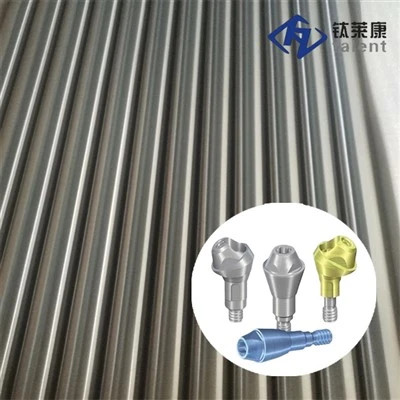
First off, let’s break down what the modulus of elasticity actually means. Think of it as a measure of how much a material can stretch or compress when you apply a force to it, and then how well it bounces back to its original shape. It’s like when you pull on a rubber band. If it’s really stretchy and goes back to normal easily, it has a certain modulus of elasticity. For medical titanium wires, this property is crucial.
Medical titanium wires are used in all sorts of applications in the medical world. You’ve got things like orthopedic surgeries, dental implants, and even some cardiovascular devices. In orthopedics, for example, these wires are used to hold bones together during the healing process. If the modulus of elasticity of the titanium wire is too high, it might be too rigid. That means it could put too much stress on the surrounding bone tissue, which could lead to problems like bone resorption or even implant failure. On the other hand, if the modulus is too low, the wire might not be able to provide the necessary support, and the bones might not heal properly.
So, what’s the typical modulus of elasticity for medical titanium wires? Well, it usually falls in the range of about 110 – 120 GPa (gigapascals). That’s a pretty specific range, and it’s not by accident. Titanium alloys, which are commonly used to make these wires, are engineered to have this kind of modulus for a reason. For instance, the most commonly used titanium alloy in the medical field is Ti-6Al-4V (titanium with 6% aluminum and 4% vanadium). This alloy has a modulus of around 114 GPa, which is ideal for many medical applications.
Let’s take a closer look at why this range is so perfect. In dental implants, the modulus of elasticity needs to be similar to that of the surrounding bone. That way, the implant can distribute the forces evenly during chewing and other oral functions. If the wire is too stiff compared to the bone, it can cause the bone to bear less stress, which over time can lead to bone loss around the implant. The 110 – 120 GPa range for medical titanium wires helps to mimic the behavior of bone, reducing the risk of these complications.
In orthopedic surgeries, the wires are often used to stabilize fractures. They need to be flexible enough to be shaped around the bones but also strong enough to hold them in place during the healing process. The specific modulus of elasticity of the titanium wire allows it to bend and adapt to the shape of the bone while still providing the necessary support. This is really important because a proper fit is essential for the success of the surgery and the recovery of the patient.
One of the great things about medical titanium wires is their biocompatibility. Unlike some other metals, titanium doesn’t cause a negative reaction in the human body. This is crucial because once a wire is implanted, it needs to stay there without causing any inflammation or other health issues. And thanks to its unique modulus of elasticity and biocompatibility, medical titanium wires can perform their job effectively for a long time.
Now, let’s talk about how we as suppliers ensure the quality and the right modulus of elasticity of these wires. We start by using high – quality raw materials. Our titanium alloys are sourced from reliable manufacturers who follow strict quality control standards. Once we have the raw materials, we use advanced manufacturing processes. These processes are carefully calibrated to ensure that the resulting wires have the desired modulus of elasticity. We use a variety of tests and measurements to check the properties of the wires. For example, we use tensile testing machines to measure how the wires respond to stretching forces. By doing these tests, we can confirm that the modulus of elasticity is within the 110 – 120 GPa range.
But it’s not just about getting the right modulus. We also focus on other properties of the medical titanium wires, like their surface finish and corrosion resistance. A smooth surface finish is important because it can reduce the risk of tissue damage and infection. And good corrosion resistance ensures that the wires will last a long time inside the body without deteriorating.
If you’re in the medical industry and you’re looking for high – quality medical titanium wires, we’ve got you covered. Our goal is to provide products that meet the strictest medical standards. We understand how important it is for your patients’ health that the wires you use are of the best quality. Whether you’re a surgeon, a medical device manufacturer, or anyone else in the medical field, we can supply you with the medical titanium wires you need.
If you’re interested in learning more about our medical titanium wires, or if you want to discuss a potential purchase, don’t hesitate to reach out. We’re here to answer all your questions and find the best solution for your needs. You can start a conversation with us. We’re ready to have a chat about your requirements and how our products can fit into your projects.
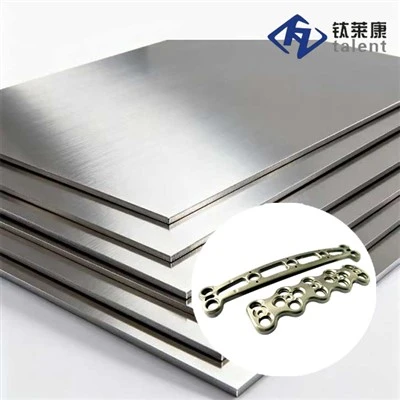
So, that’s a wrap on the modulus of elasticity of medical titanium wires. I hope this has given you a better understanding of why it’s such an important property in the medical world. And remember, if you want top – notch medical titanium wires, we’re the ones to talk to!
Industrial Titanium Bars References
- "Biomaterials Science: An Introduction to Materials in Medicine" by Budynas, R. G., & Nisbett, J. K.
- "The Mechanical Behavior of Materials" by Ashby, M. F., & Jones, D. R. H.
Baoji Tailaikang High-Tech Metal Materials Co., Ltd.
With abundant experience, we are one of the most professional medical titanium wires manufacturers and suppliers in China. Please feel free to buy medical titanium wires for sale here and get pricelist from our factory. For price consultation, contact us.
Address: No. 1, Southeast Cross of Gaoxin Avenue and Fenghuang 3rd Road, High-tech Development Zone, Baoji City, Shaanxi Province, China
E-mail: sale@tlkjs.com
WebSite: https://www.tlkmetal.com/
